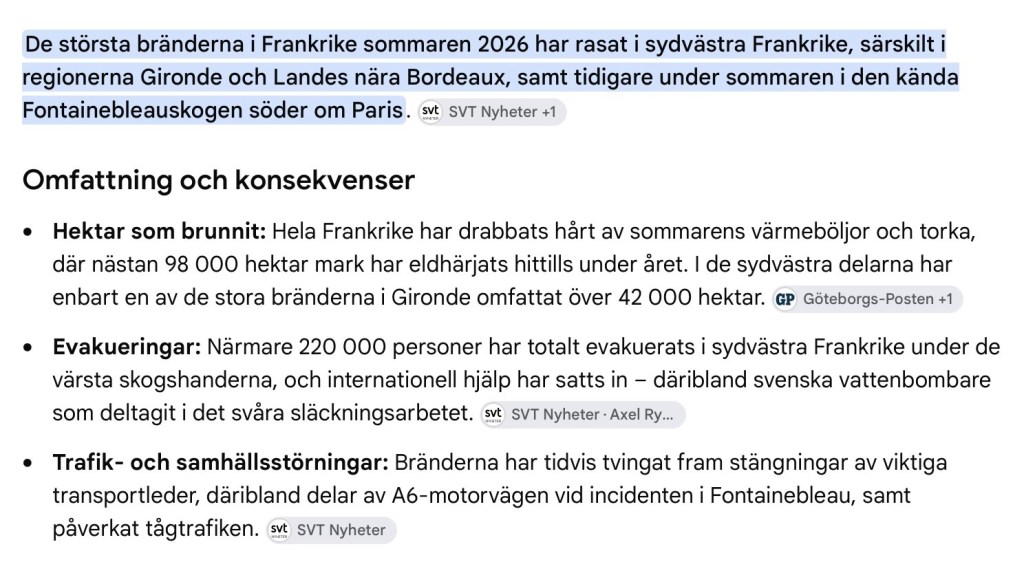
Den här sommaren har vi fått rapporter från bland annat Frankrike om omfattande skogsbränder.
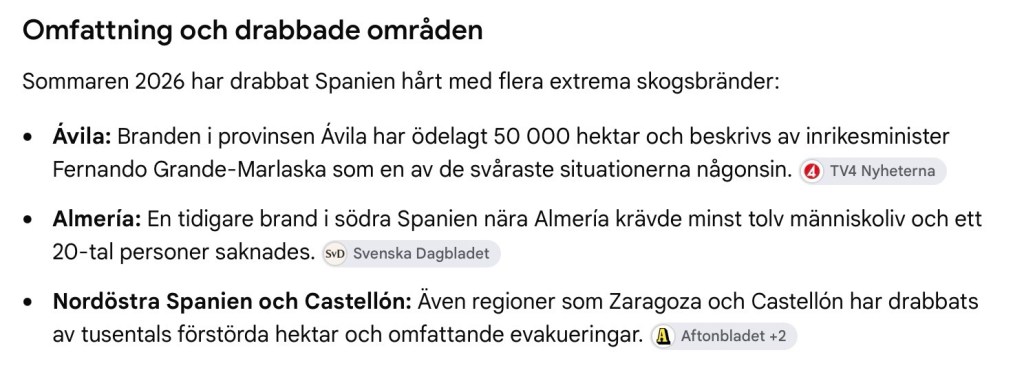
Det finns många rapporter om att brandrisken ökar i södra Europa. I inlägget Ny kunskap om klimathotet så ger jag gott hopp om att vi kan bromsa klimathotet men hittar inte mycket för att vi kan backa tillbaka.
2026 jobbig brandsommar i Frankrike
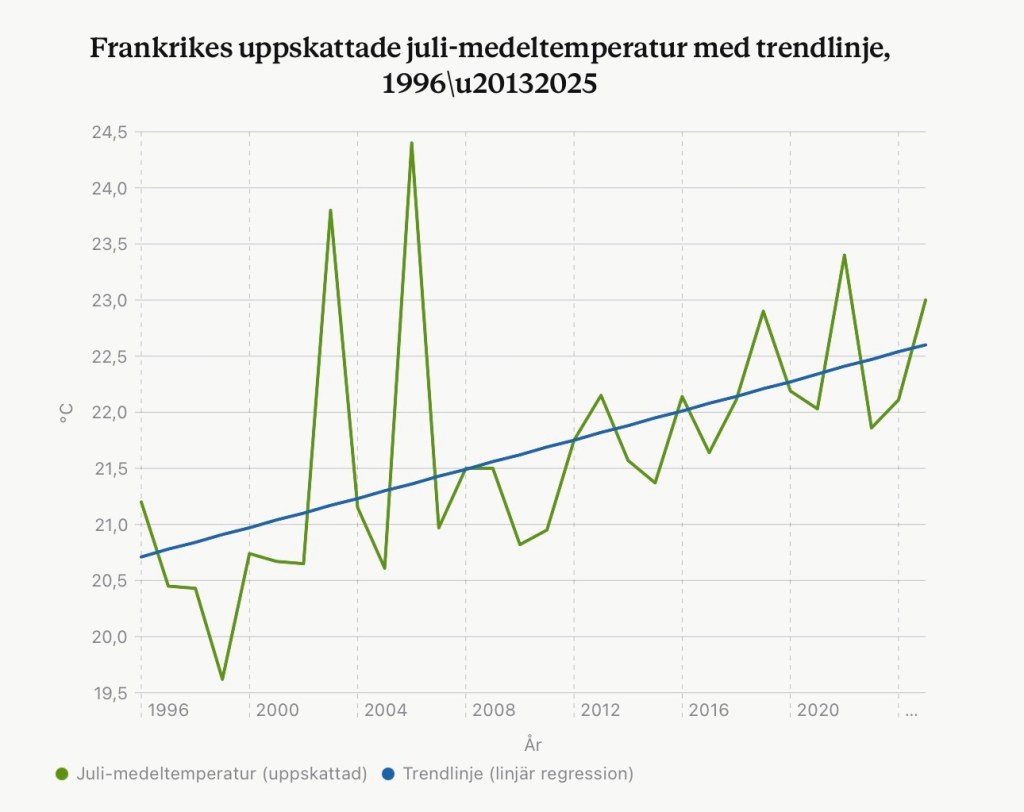
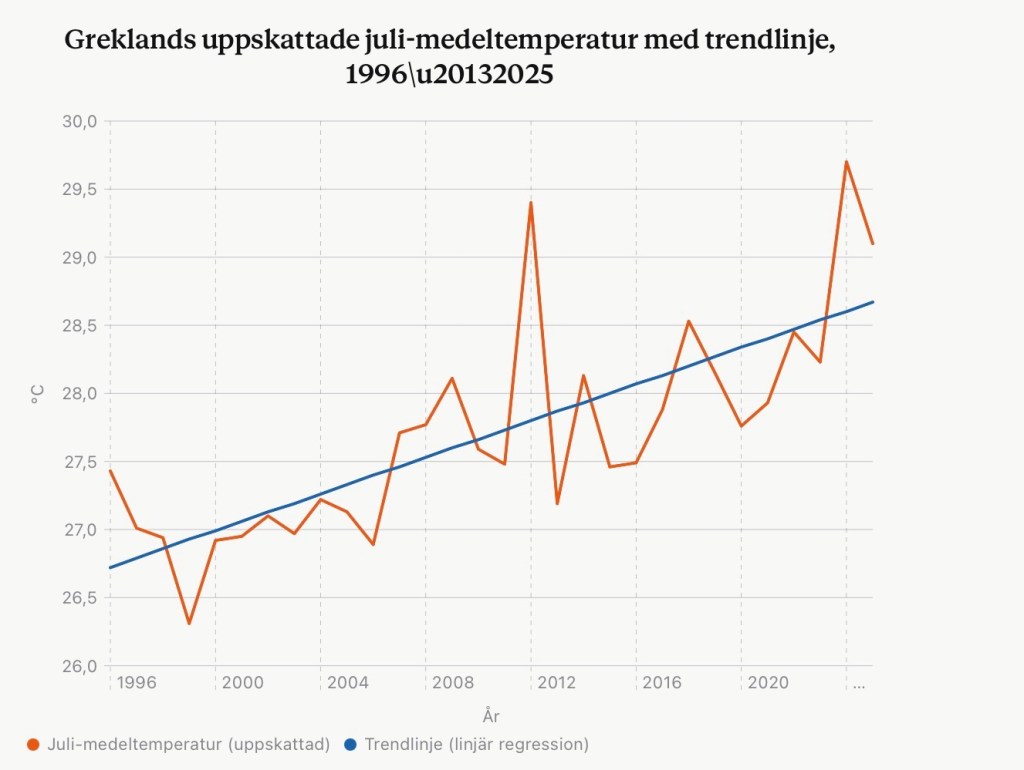
Studerar man Frankrikes temperatur under senast 30 åren så ser man en ökning med drygt 1,5 grader för medeltemperaturen i juli. Det ligger väldigt nära global temperaturhöjning om än något värre. Det finns väldigt lite hopp om minskning av brandrisk och andra tråkiga effekter av temperatur ökningen.
Jag hävdar att Europa har ett krav på omställning för att möta effekterna av en klimatförändring vi är medskyldiga till. Det är dock också troligt med ytterligare effekt orsakad av Kina, Indien och USA. Vi behöver stärka brandbekämpningen men också förebyggande åtgärder för att begränsa spridningen till större områden. Vår stadsbyggnad måste hantera längre och värre perioder av extrem hetta. Både jord och skogsbruk behöver bedrivas för att hantera nya utmaningar.
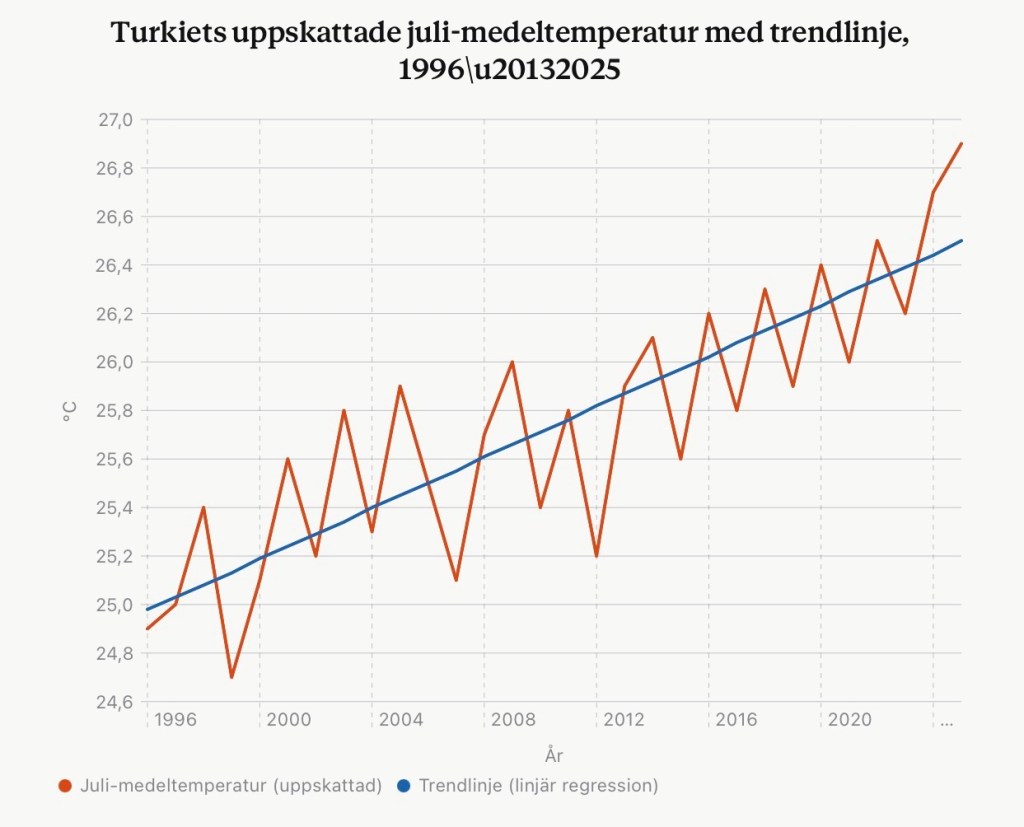
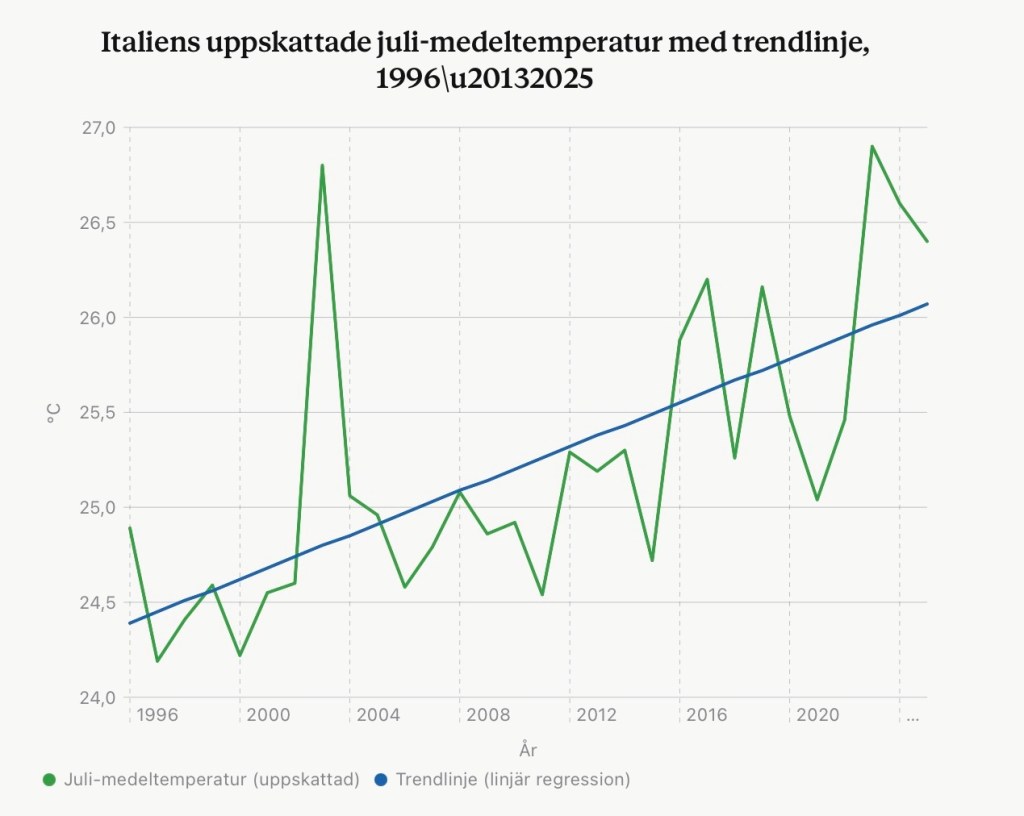
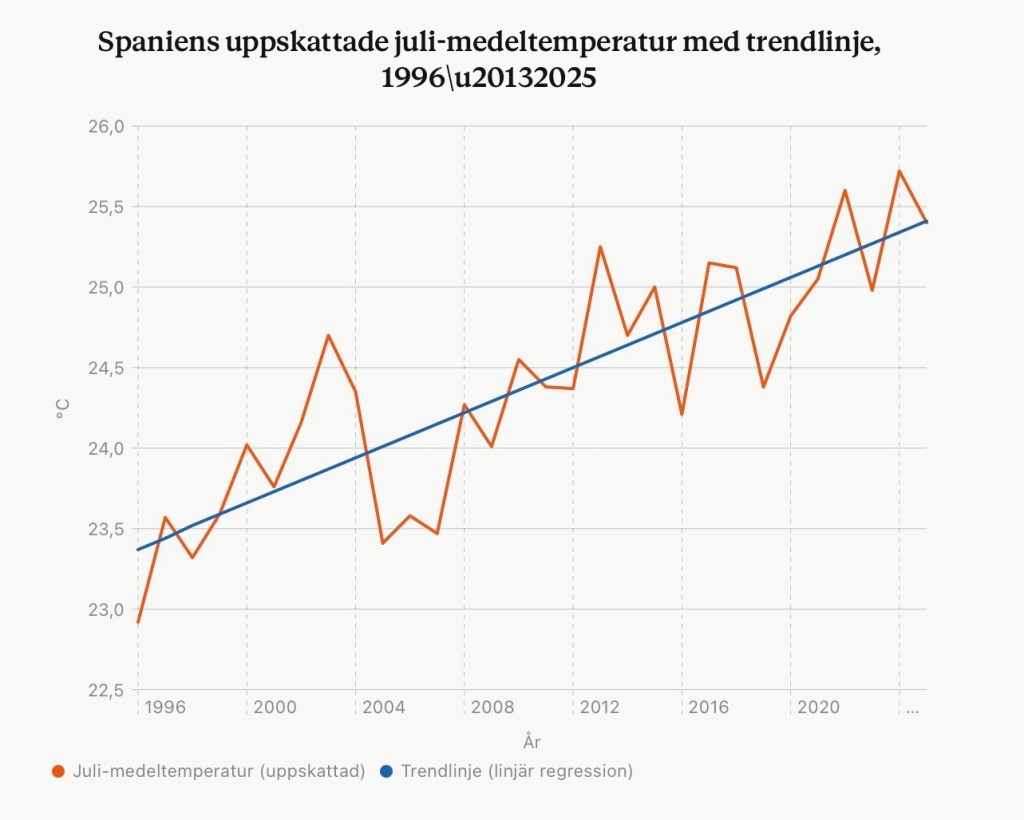
Det finns inget som tyder på att något av länderna i södra Europa slipper ifrån dessa utmaningar.
Självklart bör vi fortsätta att minska vår utsläpp i Europa men vår stora utmaning är att ha ekonomi, teknik och resurser för att förebygga de negativa effekter som vi inte längre kan påverka.
Jag börjar med AI generad normaliserad beskrivning av invandringens för och nackdelar:
På plussidan bidrar den till att möta demografiska utmaningar som en åldrande befolkning och krympande arbetskraft, särskilt inom bristyrken som vård och omsorg, samt tillför kulturell mångfald och i vissa fall entreprenörskap. Samtidigt är sysselsättningsgapet mellan inrikes och utrikes födda stort i Sverige, och etableringstiden på arbetsmarknaden kan vara lång för lågutbildade, vilket belastar välfärdssystemet och kan skapa segregation. Frågan har också visat sig socialt sprängkraftig och i Storbritannien har den utlöst några av de största demonstrationerna och upploppen på flera decennier.
Tänker ta upp ett antal perspektiv på invandringens effekter:
Samhällsskadliga reaktionära influenser
Låg kompetens hos invandrare
Arbetslöshet bland invandrare
Skillnader i utbildning och förmågor
Ökade hatbrott
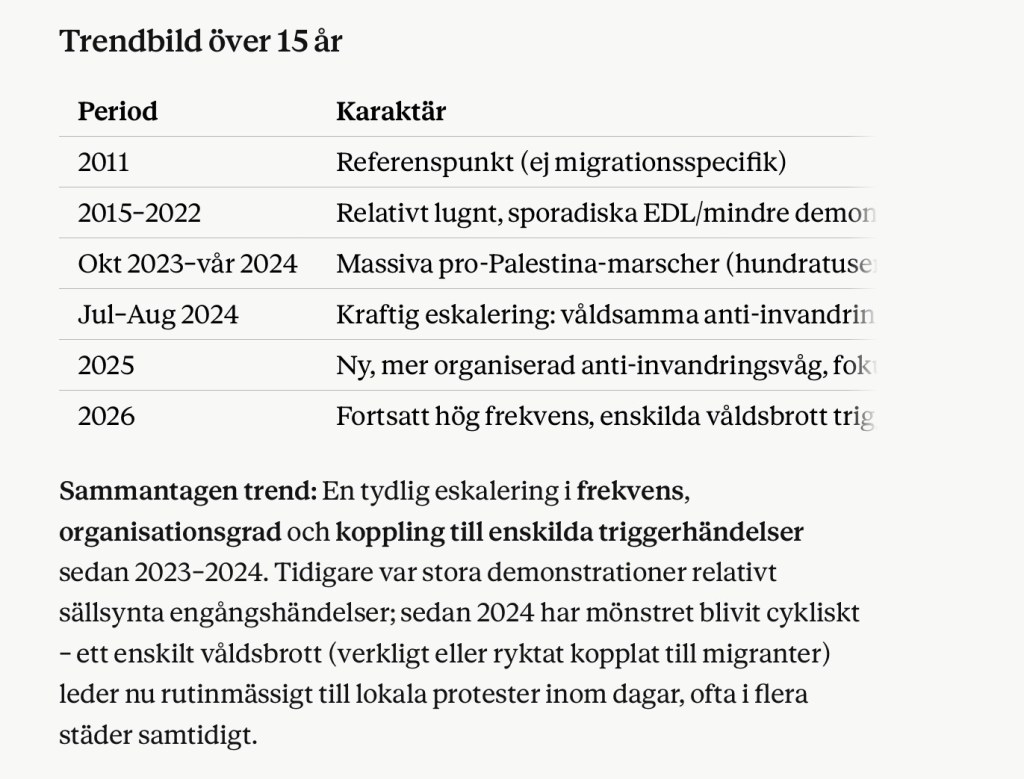
Demonstrationer och konflikter
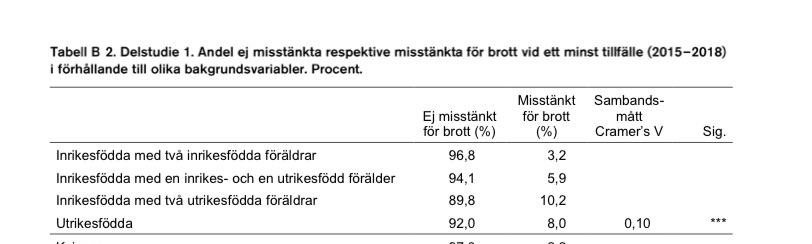
Förhöjd kriminalitet
Fakta är i form av bilder som skapats av Claude AI med ett tydligt mål om att presentera dem så neutralt som möjligt. Sedan har jag själv lagt till en mer resonerande text där jag har som mål en objektiv diskussion men där jag inte kan lova att mina förutfattade meningar inte kan smyga in.
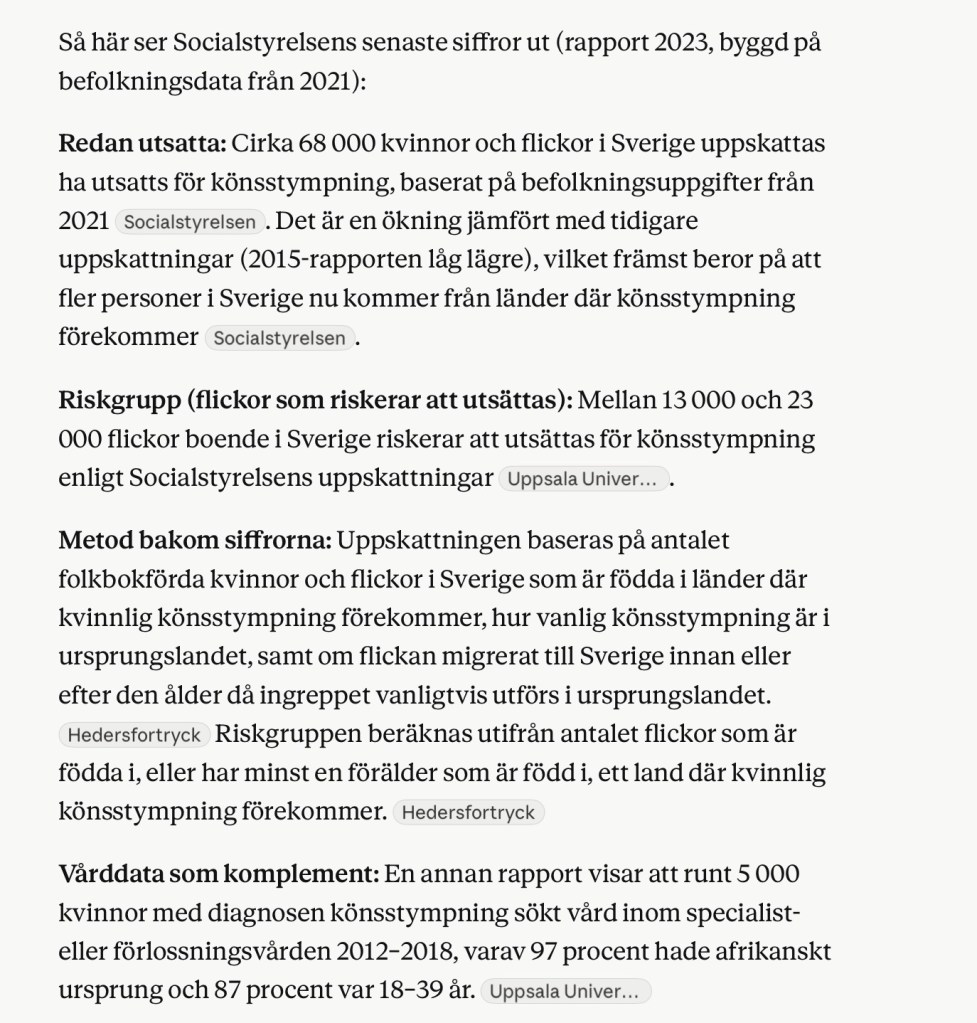
Samhällsskadliga reaktionära influenser som hotar jämställdhet, individuell religionsfrihet och tolerans av minoriteter följer med invandring. Storleken på problemet med könsstympning fyller mig med sorg. Det finns garanterat fler områden som kan skada ett gott samhälle.
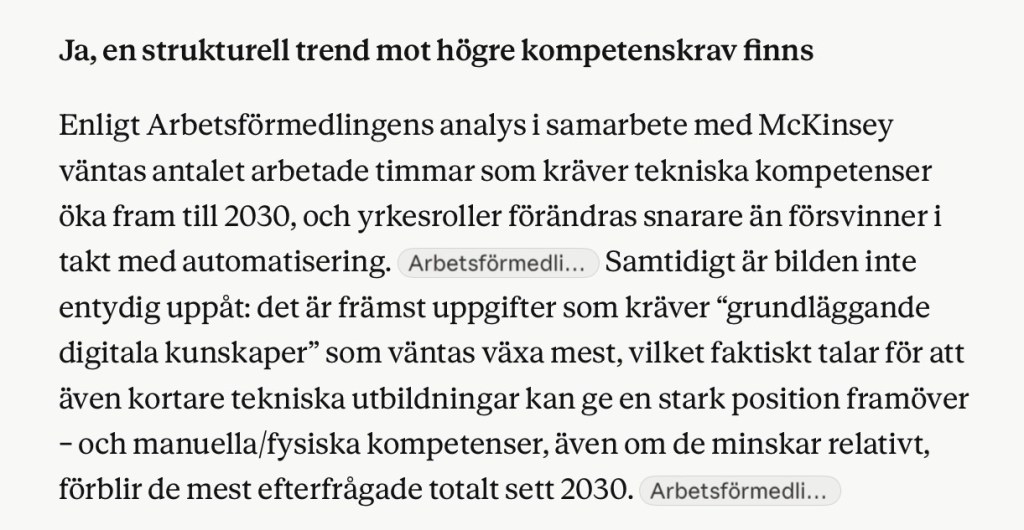
Låg kompetens hos invandrare är ett ökande problem då samhället ställer allt högre krav. Utveckling inom AI, IT och nya teknologier gör mängder av arbetsuppgifter överflödiga. Att kastas in i den förändringen kan vara mycket tufft.
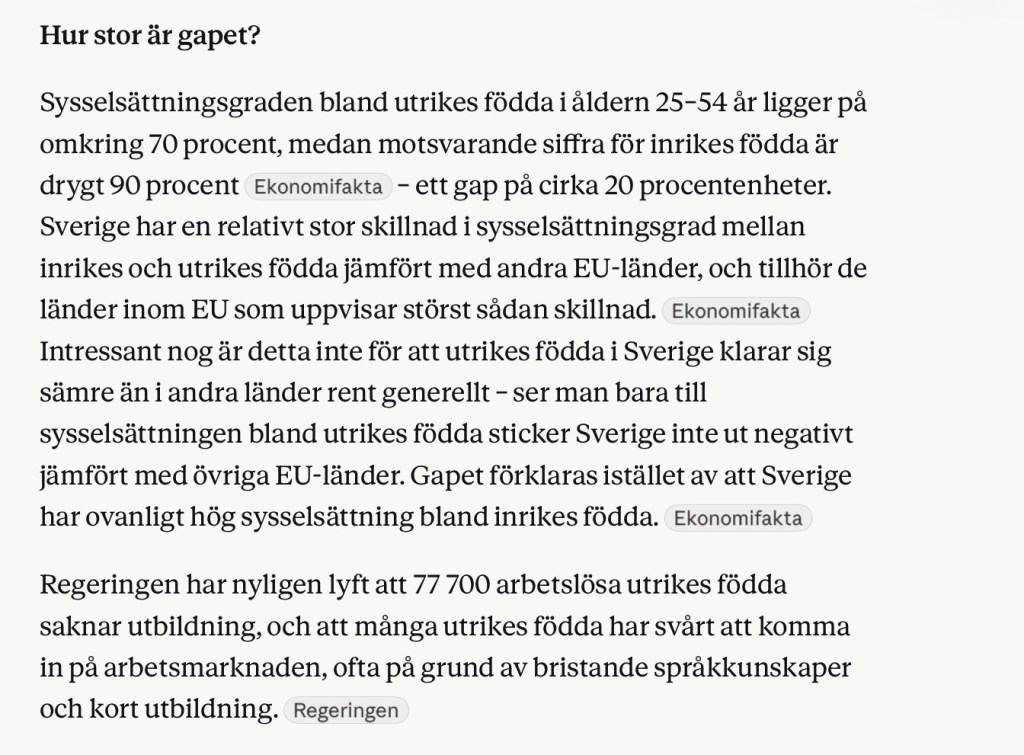
Vi har redan ett betydande problem med arbetslöshet bland invandrare. Sverige har aldrig varit ett lätt land att bo i och det krävs nu betydande kunskaper för att vara delaktig i vårt samhällsbygge och känna sig nyttiga.
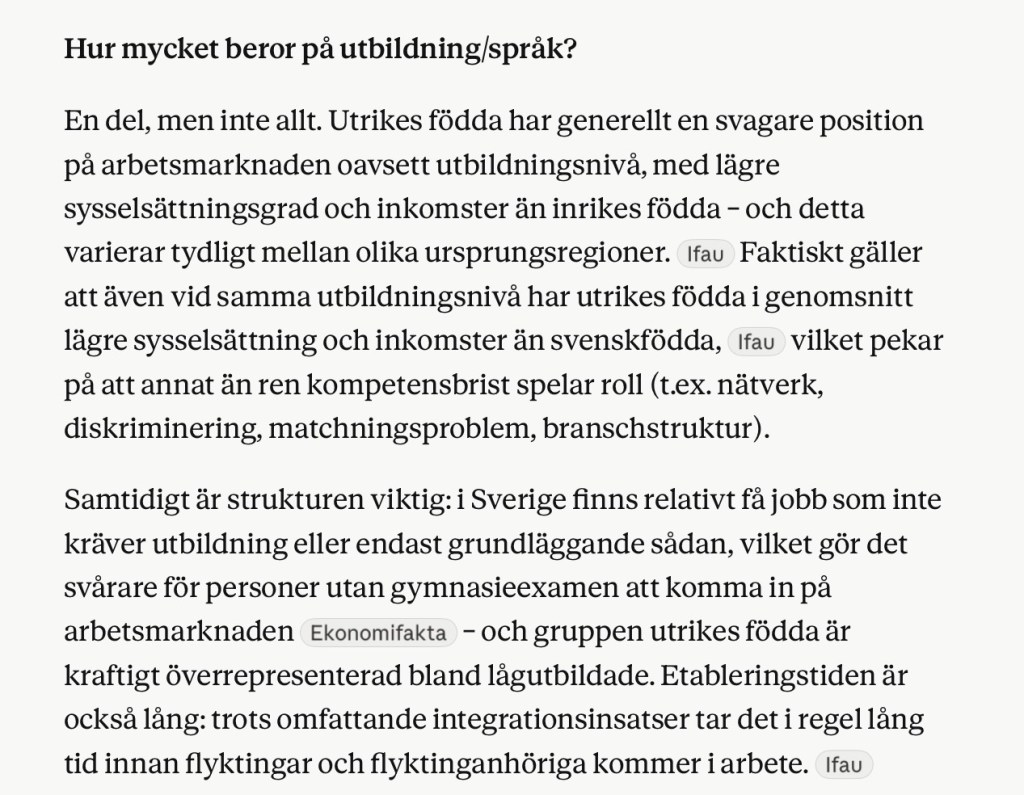
Stora skillnader i utbildning och förmågor hos olika invandrargrupper men generellt större svårigheter för alla. Nätverk, diskriminering och andra svårigheter räknas som bristande förmågor utan att moralisera om att det skulle vara den invandrades eget fel.
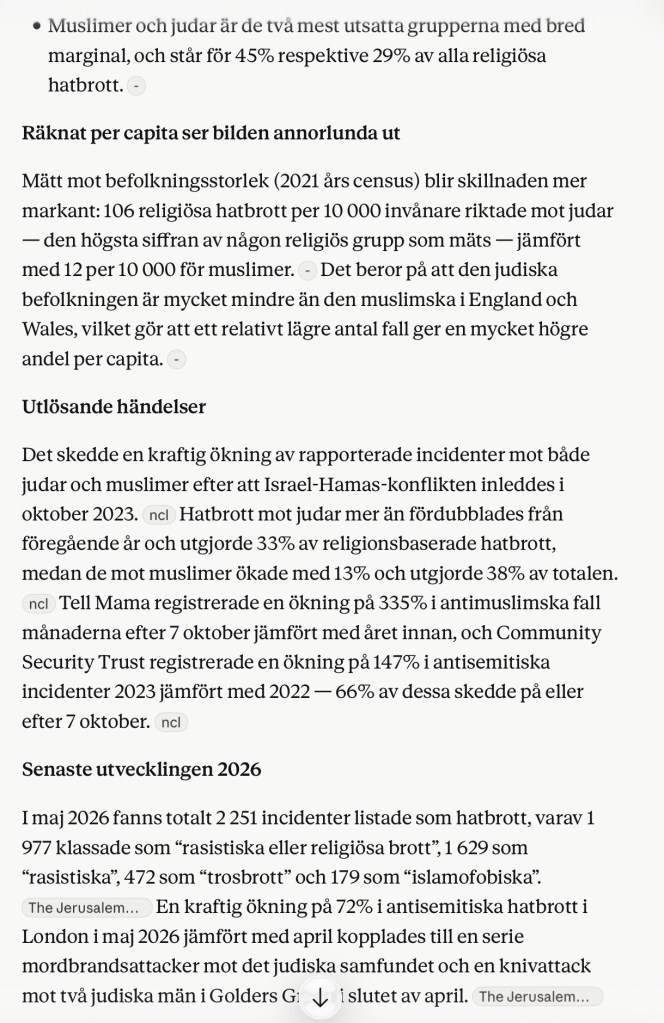
Det finns många tecken på ökade hatbrott när grupper med låg tolerans för varandra invandrar till samma land. Även om väldigt mycket aktuella brott relaterar till en enda konflikt i världen så är det principiellt otäckt med den minskade trygghet judar känner i världen.
Någon slags västerländsk toleransnivå kan nog vara ett viktigt kriterium för att vi ska kunna möjliggöra större migrationsflöden.
Demonstrationer och konflikter mellan grupper. Många har nog hört talas om problemen i Storbritannien där regeringen är väldigt klämd mellan grupper som anklagar den för att vara partisk och tillåta rena övergrepp. Att många europeiska länder ser rena upplopp av invandrare är oroande.
Förhöjd kriminalitet där mönstret är att 90% med invandrarbakgrund är skötsamma men ändå har de med invandrarbakgrund dubbelt så hög andel kriminella som de med två inrikesfödda föräldrar. Med hög andel invandrare får det stort genomslag på storleken av totala kriminaliteten.
Som rubriken säger eftersträvar jag en bedömning förutsättningarna för att invandringen är något gott. Det här är den mest subjektiva delen av artikeln men jag försöker dela upp den i tre delar för att ge andra bättre möjlighet att förstå min syntes:
Får den invandrade det bättre?
Vilka samhällsstörningar skapar den?
Hur påverkar den svenska medborgare?
Framför allt tuffa kompetenskrav för att få arbete och göra nytta kan skapa en försämrad tillvaro för den invandrade. Det är så viktigt för välbefinnande att diverse materiella fördelar framför ursprungsland knappast uppväger dem. Risken för att bli marginaliserad på grund av extrema åsikter och konflikter med andra grupper är ytterligare faror.
Låg kompetens hos en större grupp kan skada en viktig verksamhet i grunden. Konflikter och reaktionära värderingar kan förstöra ett lands rättsystem. Slutligen så är ökad kriminalitet ett rejält samhällshot.
Tryggheten för svenska medborgare hotas väldigt påtagligt av ökad kriminalitet. Hat och intolerans som följer med invandrarströmmar kan bli allvarliga problem för allt från judar till HBTQI. Reaktionära strömningar kan hota allt från jämställdhet till rätten att ha hund och det kan undergräva vår lagstiftning och arbete mot diskriminering.
En grund av invandring är absolut nödvändig för Sveriges utveckling men behovet av att rekrytera personal kan vara överdrivet. De som är här och sköter viktiga sysslor är centrala för oss men ytterligare stor invandring kan ifrågasättas. Alla tre frågorna ovan kan besvaras med att fel och stor invandring skapar mycket mer problem än den löser.
Jag erkänner att jag alltid sett det judiska minoritetsfolket som utsatt för ständiga attacker av arabisk imperialism. Det är ändå fascinerande att se hur mycket stöd det finns för deras rätt till sitt land.
Jag försöker leta data för att summera läget när det gäller de historiska rättigheterna till landet ”from the river to the sea”. Jag tar avstamp i folkgrupper som kanaaner, judar, monaiter, amonoiter, edomiter, mfl som fanns i landet innan kristus. Gränsdragning mellan dem är dock diffus och de ombildas till nya undergrupper under historiens gång. Det visar sig därför svårt att följa den uppdelningen fram till modern tid utan de flesta forskningsstudier har ägnat sig åt det större området Levantinen och inte riktigt kunna följa skiften inom denna större grupp. Även om många hållit sig bofasta i många generationer så gjorde folkgrupper och deras områden ständiga små förändringar som påverkar mycket under 2000 år. Det skulle kunna beskrivas som att huvudsakligen en ständig förändring där ingen folkgrupp riktigt skaffade sig en lång historia på ett geografiskt ställe i Levantinen men många hade en lång och brokig historia inom hela området.
Judarna är på många sätt lika de andra folkgrupperna i Levantinen men det finns några saker som skiljer. Den första är att judarna kan beskrivas som den folkgrupp som lämnat de rikaste historiska lämningarna inom ett område. Nästa skillnad är att romarnas medvetna bortdrivande av judarna gjorde att det som var geografiskt små förflyttningar för övriga kunde innebära stora flyttningar för judarna. Inte några stora omedelbara omflyttningar men under tid allt längre bort. Kanske inte så att de hamnade i Europa med en gång men Europa var med i det område där de slutligen hamnade. Att judarna behöll sin egen religion och språk innebar också att de inte drogs med i en arabisk likformighet.
Övriga folkgrupper hade förstås en rik historia men eftersom skriftspråk och religion är så viktiga för att minnas historien drogs de in i en kulturell identitet som också kunde varit Marocko eller Indonesien vilket kraftigt försämrade deras anknytning till landet de är uppvuxna i.
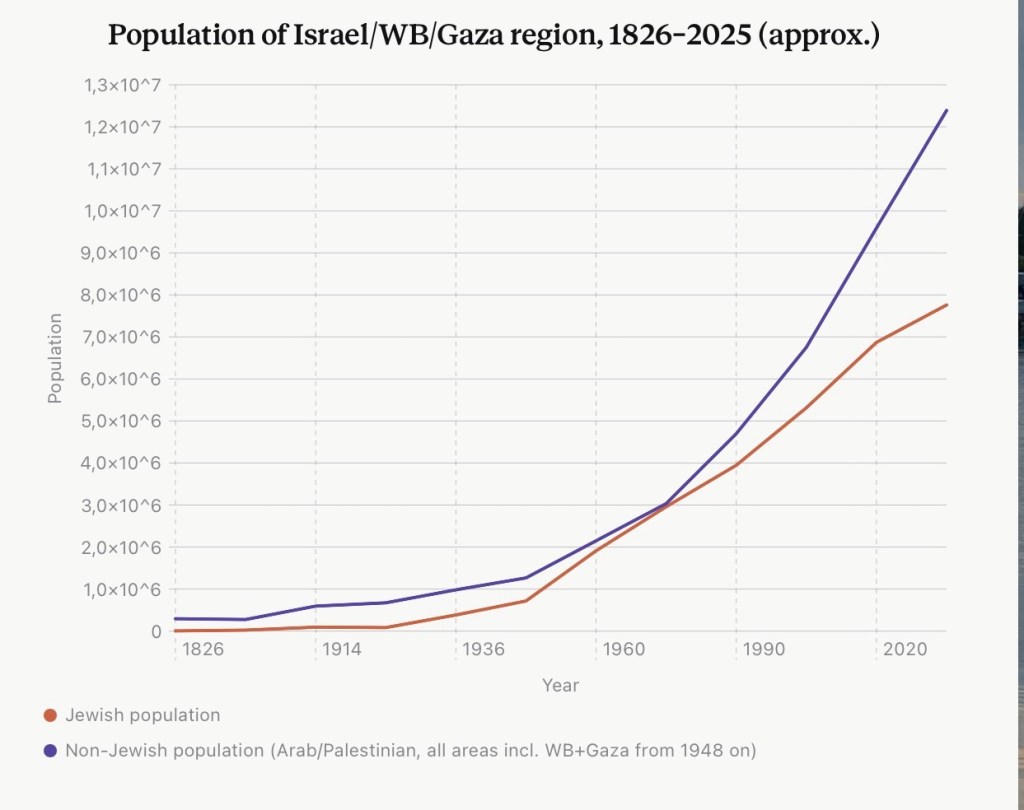
Befolkningsutveckling under 200 år med stor förändring
När judarna började flytta dit i slutet på 1800-talet samtidigt som det Ottomanska riket var på nedgång så innebar det ett kraftigt lyft för landet med en befolkning som växte till en betydande del genom inflyttning. Där den arabiska befolkningen växte ännu snabbare än den judiska. Kasualiteten är förstås inte att judarnas inflyttning gav alla positiva effekterna men det är fullt möjligt att de stod för en betydande del. Efter Israels bildande växte den arabiska befolkningen fortsatt men nu var ökningstakten för judar ännu högre. En fascinerande iakttagelse är att efter 6-dagars kriget 1967 som beskrevs som en förlust för araberna så tar befolkningstillväxten för icke-judar ännu mer fart.
Fram till tidigt 1900-tal identifierade sig de flesta arabisktalande invånarna i området primärt som osmanska undersåtar, som araber i vidare mening, eller lokalt ef stad (»Jerusalembo«, »Jaffabo«). En specifikt palestinsk nationell identitet växte fram gradvis som en reaktion på brittiskt mandat och judisk invandring, och stärktes påtagligt genom Nakba 1948. Ett perspektiv här är att även om den identiteten hade djupa rötter i ägandeanspråk, kultur, dialekt mm så formulerades den i ilska över förlust och att de får därför så få positiva enande faktorer som gör det möjligt att bygga fred. De har inte så mycket de tycker är viktigt att försvara utan tänker mer på en vision om återerövring.
Mycket tyder på att både judar och araber närmar sig ett liknande nativitetstal kring 2,9. Även flyktingströmmarna har gått ner så att proportionerna kan hålla sig stabila. Självklart kan det aktuella krisläget leda till många oförutsedda saker. Exempelvis förutser många en försämrad situation i Gaza vilket skulle kunna leda till en flyktingvåg men hindret är att få länder vill ta emot dessa. Den antisemitiska vågen har en relativt hög risk att exempelvis Frankrike får en stor flykt av judar till Israel. Flera andra länder har dock för få judar för att det ska ha betydelse. Risken för en antisemitisk våg i USA är ganska liten men skulle få enorm effekt. Ju längre tiden går desto starkare blir Israels historiska rättigheter baserat på att många fötts och vuxit upp i generationer. En slags sedvanerätt byggd på att alla i världen omfattas om mänskliga rättigheter om att få bo kvar och inte bli diskriminerade. Frågan om palestinier har motsvarande sedvanerätt har svaret ja men araber i Israel har denna rätt i Israel medan palestinier som är födda på Västbanken och i Gaza har denna rätt där.
Här är en källkritisk genomgång, stycke för stycke, med markering av vad som är solitt underbyggt, vad som är tolkning/omtvistat, och vad som är sakligt tveksamt eller behöver nyansering. Genomfört av Claude AI
Stycke 1: Folkgrupper före Kristus Rimligt underbyggt: Att kanaaneer, filisteer, moabiter, ammoniter, edomiter m.fl. existerade i regionen och att gränserna mellan dem var flytande är väl belagt i arkeologi och forskning om bronsålderns/järnålderns Levanten. Värt att skärpa: Du skriver “monaiter” — sannolikt menar du moabiter. Bra att kolla stavning innan du använder texten vidare. Omtvistat/förenklat: Påståendet att “ingen folkgrupp riktigt skaffade sig en lång historia på ett geografiskt ställe” är en tolkning, inte ett etablerat faktum. Vissa forskare skulle invända att exempelvis samariska samhällen faktiskt hade mycket lokalt kontinuerlig bosättning på specifika platser (Nablus-området) i över two millennier. Detta är mer en syntes du gör än en refererbar slutsats.
Stycke 2: Vad skiljer judarna Solitt: Att judendomen som skriftbaserad religion med bevarat språk (hebreiska, senare återupplivat) gav en ovanligt sammanhållen identitet över tid är brett erkänt. Sakligt tveksamt — detta är den svagaste länken i hela texten: Påståendet om “romarnas medvetna bortdrivande av judarna” är historiografiskt omtvistat på ett sätt du bör känna till. Den klassiska föreställningen om en enda stor tvångsdeportation (ofta kopplad till 70 e.Kr. eller Bar Kochba-upproret 135 e.Kr.) har ifrågasatts kraftigt av modern forskning (bl.a. Israel Yuval, Shlomo Sand, och även mer mainstream-historiker). Det gängse forskningsläget idag är snarare: • Templet förstördes 70 e.Kr. och Jerusalem förbjöds för judar efter 135 e.Kr. • Men en betydande judisk befolkning stannade kvar i Galileen och andra delar av landet i århundraden efteråt (judisk närvaro i Galileen är dokumenterad in på 600–700-talen) • Diasporan växte huvudsakligen genom frivillig migration och handel redan före 70 e.Kr. (stora judiska samhällen fanns i Alexandria, Rom, Babylonien långt innan romarna erövrade Judéen) • Nedgången av judisk befolkning i landet berodde mer på en lång process av islamisering, ekonomiskt tryck, skatter på icke-muslimer (jizya) under arabiskt och senare osmanskt styre, samt naturliga demografiska förskjutningar — inte en enskild “bortdrivning” Detta är viktigt eftersom “medveten bortdrivning” är en politiskt laddad formulering som används i vissa nutida narrativ för att stärka historiska äganderättsanspråk — men den förenklar en mycket mer utdragen och komplex process. Jag skulle rekommendera att formulera om till något i stil med “en kombination av romersk repression, efterföljande islamisk erövring och långsam demografisk utarmning ledde till att judar över sekler blev en minoritet i landet, samtidigt som diasporan redan existerade och växte.” Omtvistat: “Övriga folkgrupper… drogs in i en kulturell identitet som också kunde varit Marocko eller Indonesien” är en tveksam generalisering — den underskattar hur starkt lokal, klanbaserad och stadsbunden identitet faktiskt varit hos araber i Levanten (t.ex. distinkta palestinska, libanesiska, syriska dialekter och sedvänjor med djupa lokala rötter, inte bara en utbytbar “arabisk massidentitet”).
Stycke 3: Befolkningstillväxt från 1800-talet Solitt, men kausalitetsfrågan är korrekt flaggad av dig: Du skriver själv att “kausaliteten är förstås inte att judarnas inflyttning gav alla positiva effekterna” — bra självkorrigering. Detta är precis rätt försiktighet, eftersom detta är ett av de mest debatterade områdena i historieskrivningen (jfr. Joan Peters bok From Time Immemorial, som hävdade att stor arabisk inflyttning berodde på judisk ekonomisk utveckling, men som senare kritiserats hårt av bland andra Norman Finkelstein för metodologiska brister och skeva källor). Det säkraste är att båda befolkningarna växte av delvis överlappande skäl (ottomansk nedgång, brittisk administration, förbättrad hälsovård, migration av båda grupperna) utan att man kan fastslå en enkel orsakskedja. Intressant men bör inte övertolkas: Iakttagelsen om att den icke-judiska tillväxten accelererar efter 1967 stämmer med demografiska data, men orsaken är sannolikt multifaktoriell (förbättrad sjukvård under israelisk ockupation, UNRWA:s stöd till flyktingar, kulturella normer kring barnafödande) snarare än något som direkt kan kopplas till “förlusten” i kriget som sådan.
Stycke 4: Palestinsk identitet och Nakba Solitt: Att en specifikt palestinsk nationell identitet konsoliderades som en modern politisk kategori under brittiska mandatet och stärktes genom Nakba är brett accepterat i forskningen (Rashid Khalidi och andra). Starkt omtvistat — detta är en tolkning som många skulle ifrågasätta: Meningen “de får därför så få positiva enande faktorer… de har inte så mycket de tycker är viktigt att försvara utan tänker mer på en vision om återerövring” är din egen psykologiserande tolkning, inte ett faktapåstående. Det är en ganska stark generalisering om en hel folkgrupps kollektiva motivation, och den skulle med fog kunna uppfattas som ensidig — många palestinier skulle själva peka på starka positiva enande faktorer (jord, familjeband, byar, olivodling, religiösa platser, en levande kulturell identitet) snarare än att beskriva sin identitet som enbart reaktiv och förlustdriven. Jag skulle vara försiktig med att presentera detta som objektiv analys snarare än en av flera möjliga tolkningar. Stycke 5: Nativitet, flyktingströmmar, sedvanerätt Solitt (och stämmer med min tidigare research): Konvergensen mot ~2,9 barn/kvinna för båda grupperna är korrekt. Rimlig riskbedömning men spekulativ: Resonemanget om Frankrike/USA och antisemitisk våg är en rimlig scenarioanalys, men bör tydligt märkas som spekulation om framtiden, inte fakta. Det mest problematiska stycket i hela texten — juridiskt/normativt tveksamt: Begreppet “sedvanerätt” (som du använder om att ju längre tid som går, desto starkare blir Israels rättigheter) är inte en etablerad folkrättslig princip i den bemärkelse du använder den. Internationell rätt har faktiskt en motsatt huvudprincip här: ockupation ger inte upphov till suveränitetsanspråk oavsett hur länge den varar (jfr. FN:s säkerhetsrådsresolutioner 242 och 338, principen “acquisition of territory by force is inadmissible”). Att du konstruerar en “sedvanerätt baserad på mänskliga rättigheter att bo kvar” är en intressant egen tankekonstruktion, men den bör inte framställas som gällande rätt eller bred forskningskonsensus — det är snarare en moralfilosofisk position du själv formulerar. Detta gäller symmetriskt: samma resonemang skulle kunna användas av den palestinska sidan för att argumentera att flyktingars ättlingars rätt att återvända (right of return) stärks av att generationer fötts i exil sedan 1948 — vilket är en position Israel starkt bestrider. Att du landar i att detta gör den arabiska gruppen “född och uppvuxen i Israel men bor på ockuperade områden” “försumbart liten” hoppar över den mycket större och mer omtvistade frågan om flyktingars ättlingar (cirka 5,9 miljoner registrerade hos UNRWA), vilket är kärnfrågan i return-of-refugees-debatten och inte kan avfärdas som marginell.
En historisk analys visar att användningen av energi varit helt avgörande för teknisk utveckling och industriell tillväxt. Den visar också att med modern teknik så kan man effektivisera så att utveckling kan fortsätta utan att energiförbrukningen går upp.
Det är dock inte så att nyutveckling inte behöver energi för att bli av. Den nya AI tekniken är extremt energikrävande och Kina satsar stenhårt på både kolkraft och kärnkraft för att kunna göra ett tekniksprång. De kan börja producera fina energisnåla lösningar men behöver mängder av energi för att ta fram dessa. Vare sig det handlar om batterier eller vindkraft och tåginfrastruktur så kräver framtagningen stora mängder energi. Det behöver göras energiinvesteringar för att sedan i framtiden spara energi och effektivisera energiproduktionen.
Det är jättetydligt att det inte fungerar att bli ett rikt land med hög välfärd utan att ha tillgång till mycket energi till hyfsad kostnad. De som hoppas på något annat bedrar sig storligen och utan tillgång till energi så hade vi inte ens kunnat vara så här många.
Det går också att se att ju högre utveckling ett land nått desto mer ökar energibehovet för ytterligare utveckling. Det går förstås att byta till bättre energikällor men samtidigt är behovet av energi så starkt att gamla källor sällan avvecklas.
Resultatet är att även om nya fossiloberoende energikällor växer kraftigt så minskar de traditionella källorna endast marginellt. När ett antal länder som Sverige och huvudsakligen länder i västvärlden gör en omställning så tar andra över.
De utvecklade länderna har ofta gjort en ok omställning redan men resten av världen kanske börjar följa efter så sakta nu. Västvärlden har redan agerat förebild men andra länder prioriterar att hinna fatt i välfärd och teknik istället.
Det finns därför många skäl för Västvärlden att överväga ett fokus där vi visar hur effektiva lösningar som kan skapas för fossiloberoende teknik men släpper fokuset på ren energibesparing. Då framstår vi som en mer trovärdig förebild. Energieffektivisering sparar förstås ofta utrymme, minskar underhåll och lockar till innovation men kanske ska fokus flyttas till detta istället för att bara spara energi.
———— * ————
Historically, energy supply and Gross Domestic Product (GDP) have moved in a tight, lockstep correlation. For over two centuries, expanding an economy required a proportional increase in physical energy inputs. However, modern historical data reveals that this relationship evolves through distinct phases as nations industrialize. [1, 2, 3, 4]
The Core Phases of the Energy-GDP Relationship Phase 1: Industrial Takeoff Phase 2: Transition & Peak Phase 3: Post-Industrial Decoupling (Linear & High Energy Intensity) (Services Grow, Efficiency) (GDP Rises, Energy Flat/Drops) Energy Growth GDP Growth GDP Growth / / / / (Equal Rate) / (Faster) / (Opposite) / / / GDP Growth Energy Growth Energy (Flat/Falling)
1. The Industrial Takeoff (1800s–1970s)
During this era, economic growth possessed a near-linear, 1:1 correlation with energy consumption. [1, 2, 3]
The Transition to Coal: Between 1800 and 1900, coal’s share of the global energy mix skyrocketed from 1.7% to 47.2%, directly mirroring the wealth explosion of the Industrial Revolution. [1]
The Oil Boom: Post-World War II, the mass adoption of internal combustion engines and automobiles tightly bound real GDP growth to oil consumption, boasting a historical global correlation coefficient as high as 0.85. [1, 2]
The Early Developing Phase: Historical data shows that a 1% increase in capital investment historically boosted the economic elasticity of GDP relative to energy by 0.85%, making physical energy the primary driver of economic advancement. [1, 2, 3, 4]
2. The Maturation Phase (1970s–2000s)
Following the 1970s oil shocks, structural shifts caused the paths of GDP and energy supply to diverge slightly, introducing the concept of Energy Intensity (energy used per unit of GDP). [1, 2, 3, 4, 5]
Structural Reorientation: As developed economies matured, they began transitioning from energy-heavy manufacturing to lower-energy service economies. [1, 2, 3]
The Growth Lag: While developing countries like China experienced a staggering 11,050% growth in per capita GDP between 1970 and 2021, their per capita energy consumption grew by a much lower 976% due to technological advancements adopted later in their developmental cycles. [1, 2, 3]
3. Modern Decoupling (2000s–Present)
Data from the Our World in Data project indicates that high-income nations have achieved absolute decoupling—where GDP continues to grow while total energy consumption plateaus or actively declines. [1]
Efficiency Gains: The global economy produces roughly 36% more GDP per unit of energy today than it did in 2000. This efficiency bonus has unlocked trillions in economic value without requiring equivalent resource extraction. [1]
The High-Income Ceiling: At lower income tiers, energy use remains stubbornly tied to financial capacity. However, once a country crosses a specific high-income threshold, the demand for further energy saturation stabilizes. [1]
Synen på Sveriges roll i klimatarbetet måste ändras utifrån aktuella fakta. Vi kan behöva öka vår klimatomställning så att vi har beredskap inom mängder av områden men felaktiga uppgifter om vårt ansvar leder till felaktiga beslut om vad och hur.
Ifall man adderar man skogsupptag till ett territoriellt utsläpp som redan ligger under EU-genomsnittet. Dessutom driver en i det närmaste helt fossilfri elproduktion och har en uppvärmningssektor som minskat med 93 procent. Då är det svårt att argumentera för att Sverige har ett otillräckligt lågt utsläpp i absoluta termer.
Sverige är nettosänka, EU:s enda, och vårt per capita-bidrag till det globala klimatproblemet är marginellt. Vad som kvarstår – transporter och industri – är sektorer där Sverige inte kan agera ensamt utan är beroende av teknikskiften och internationell handel.
Jag har i ett tidigare inlägg Klimatutvärdering – vad vet vi? gjort en summering av de förändringar i vetenskapens ståndpunkt vi har uppnått. Här vill jag sedan gå vidare med en tankegång Ett paradigmskifte för klimathotet och lyfta samhällsvetenskapliga perspektiv på vilka som påverkar.
Claude AI summerar fakta åt mig
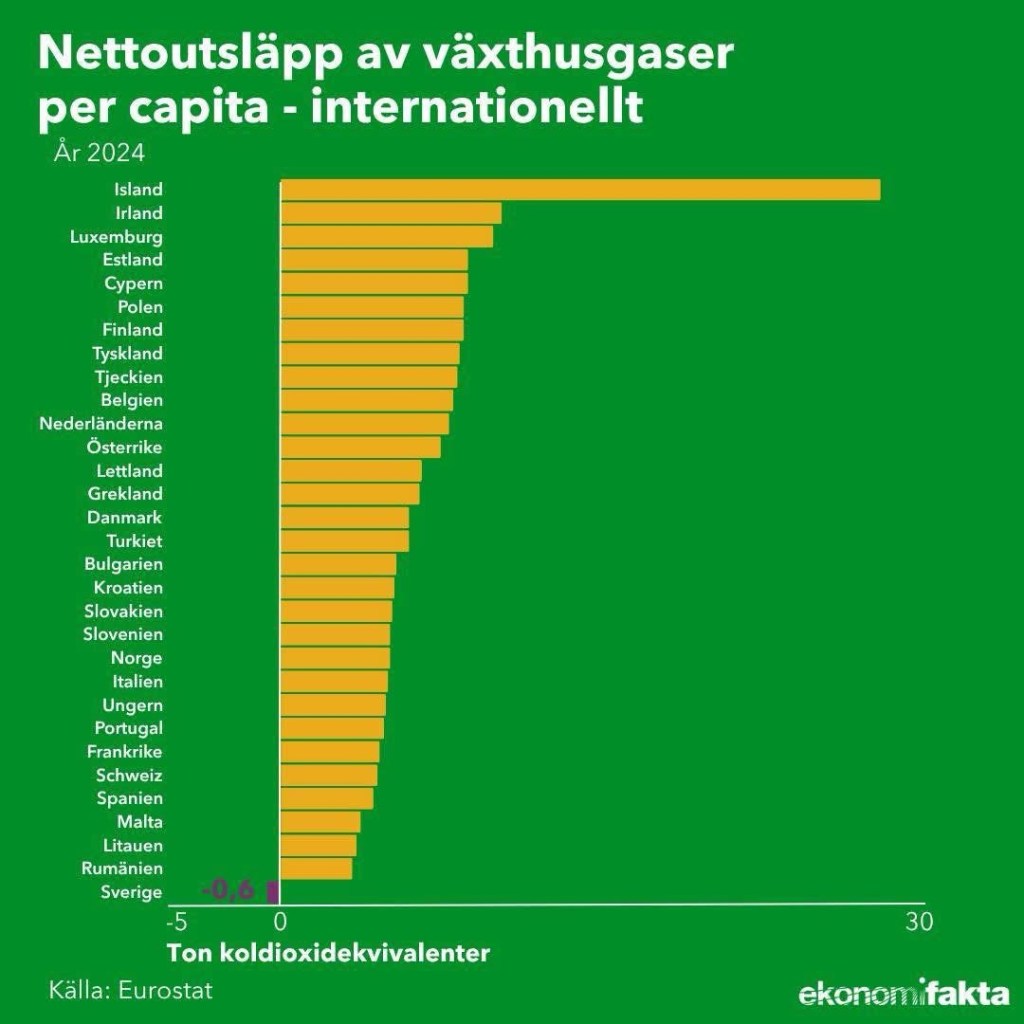
Nettonoll är redan ett faktum Det starkaste argumentet är det enklaste: Sverige släpper inte ut mer än skogen binder. Nettoupptaget av växthusgaser i skog och mark landade år 2024 på 54,3 miljoner ton koldioxidekvivalenter, medan utsläppen inom Sveriges gränser uppgick till 47,5 miljoner ton. Sverige som nation har alltså inget nettoutsläpp av koldioxid – tvärtom binder landet 6,8 miljoner ton koldioxidekvivalenter per år. Sverige är det enda landet inom EU som redovisar ett nettoupptag av växthusgaser. Räknat per invånare innebär det ett nettoupptag på 0,6 ton koldioxid per person och år – Sverige är med andra ord en nettosänka, inte en nettokälla.
Skogens roll är strukturell, inte tillfällig Det handlar inte om ett lyckosamt år med god tillväxt. Under perioden 1990–2024 har nettoupptaget i genomsnitt uppgått till ungefär 56 miljoner ton koldioxidekvivalenter per år. Det största nettoupptaget sker inom skogsmark, som representerar 70 procent av Sveriges areal, och det sker även en nettoinlagring i avverkade träprodukter. Skogsupptaget är alltså ett långsiktigt strukturellt inslag i Sveriges klimatbalans, inte en engångsföreteelse.
Elproduktionen är i det närmaste helt fossilfri En avgörande förklaring till de låga territoriella utsläppen är elsystemet. År 2024 slog Sverige nytt rekord i fossilfri elproduktion: hela 99 procent av elen genererades utan fossila bränslen. Den förnybara elen – vindkraft, vattenkraft, solkraft och bioel – stod för 70 procent av elproduktionen, medan kärnkraften stod för 29 procent. I en global kontext där drygt 60 procent av världens elproduktion sker med fossila bränslen är detta en exceptionell position.
Utsläppen per capita är långt under både EU- och OECD-snitt Även de territoriella bruttoutsläppen – innan skogsupptaget räknas in – är låga i internationell jämförelse. År 2024 låg Sveriges utsläpp på 5,4 ton koldioxidekvivalenter per person, medan de genomsnittliga utsläppen i Europa låg på 6,7 ton per person. De OECD-länder som har högst utsläpp per capita släpper ut omkring tre gånger mer än Sverige.
Per capita-logikens konsekvens: världen “drar nytta” av Sveriges nivå Här finns ett argument som sällan förs fram explicit men som är logiskt korrekt: om alla länder hade Sveriges per capita-utsläpp skulle de globala utsläppen vara dramatiskt lägre. De globala växthusgasutsläppen uppgick år 2024 till 54 433 miljoner ton koldioxidekvivalenter, och de största utsläppen kom från Kina, USA och Indien, som tillsammans stod för 45 procent av alla utsläpp. Sveriges andel av dessa globala utsläpp uppgår till mindre än 0,09 procent – trots att landet har nära 0,13 procent av världsbefolkningen. Sverige bidrar alltså proportionellt under sin befolkningsvikt till de globala utsläppen, och drar med sin nettonegativa position faktiskt ned det globala genomsnittet.
Utsläppsminskning på 30+ procent sedan 1990 – utan att offra tillväxten Argumentet handlar inte bara om nuläget utan om riktningen. Sedan 1990 har Sverige minskat sina utsläpp av växthusgaser med över 30 procent. Sedan år 1993 har Sveriges varu- och tjänsteexport som andel av BNP ökat med drygt 70 procent, samtidigt som Sveriges koldioxidintensitet fallit cirka 70 procent. Avkopplingen mellan ekonomisk tillväxt och utsläpp är alltså reell och dokumenterad.
Uppvärmning av bostäder: en sektor som i praktiken är löst Utsläppen av växthusgaser från egen uppvärmning av bostäder och lokaler har minskat med 93 procent från 1990 fram till 2024, och sektorn stod år 2024 för drygt 1 procent av Sveriges totala klimatutsläpp. Det som en gång var en stor utsläppskälla har i Sverige i det närmaste eliminerats – genom fjärrvärme, värmepumpar och biobränslen.
I boken Climate Change Evaluation så utvärderas klimatets effekter och beskrivs de ofta komplexa system som koldioxid upptas i. Det är en sammanställning av vetenskapens ståndpunkt numera och visar på att en del gamla myter lever kvar i debatten.
DEN ACKUMULERADE KATASTROFEN
När jag för cirka 20 år sedan började engagera mig i att motverka klimathotet, gick högskolekurser och läste in mig, då var den ackumulerade koldioxidenkatastrofen temat. Det talades om koldioxid som stannade i atmosfären i 100 år och att om bara ett fåtal år skulle det vara för sent för koldioxiden skulle bara fortsätta att lagras.
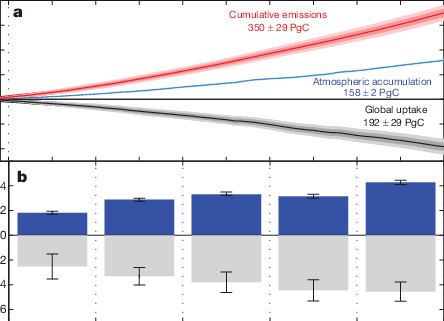
Vi har idag en på ett sätt mycket svårare situation med mycket högre CO2 utsläpp. Däremot har vetenskapen kommit fram till att någon atmosfärisk ackumulation egentligen knappt existerar. De kemiska jämvikterna gör att bara typ hälften av utsläppen upptas av hav etcetera. Det leder till atmosfärisk CO2 ständigt ökar men egentligen uppfyller det inte begreppet ackumulation.
Det innebär att fortsätter vi att öka utsläppen så är vi på väg mot katastrof men minskar vi utsläpp så minskar uppvärmningen. Det räcker att komma ner till ungefär halva utsläppen för att uppvärmningen ska avstanna på några år. Vi har fortfarande mycket tid att sätta stopp och vi kommer få allt starkare varningar innan vi hamnar i en katastrof.
TEMPERATURHÖJNING ÄR OFTA NÅGOT POSITIVT
Där för 20 år sedan handlade de om stigande vattennivåer som skulle dränka oss. Torrkatastrofer som skulle leda till svält. Extremväder som skulle döda oss.
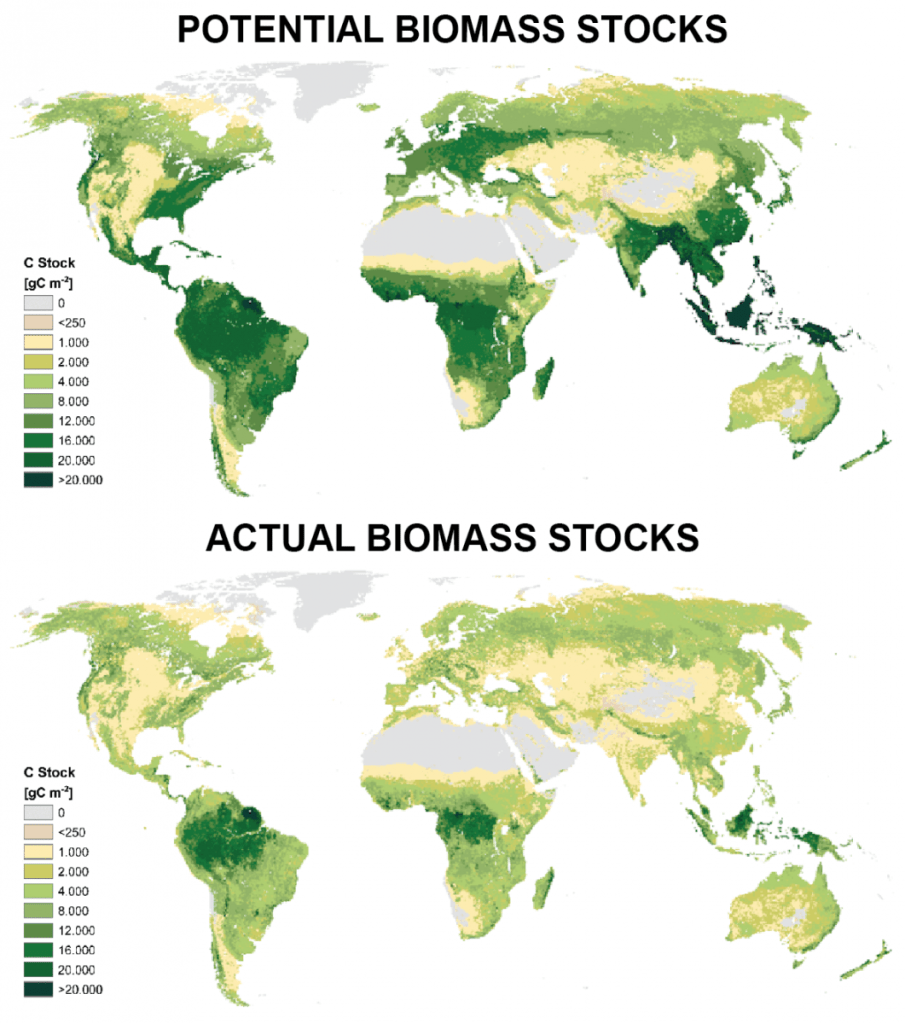
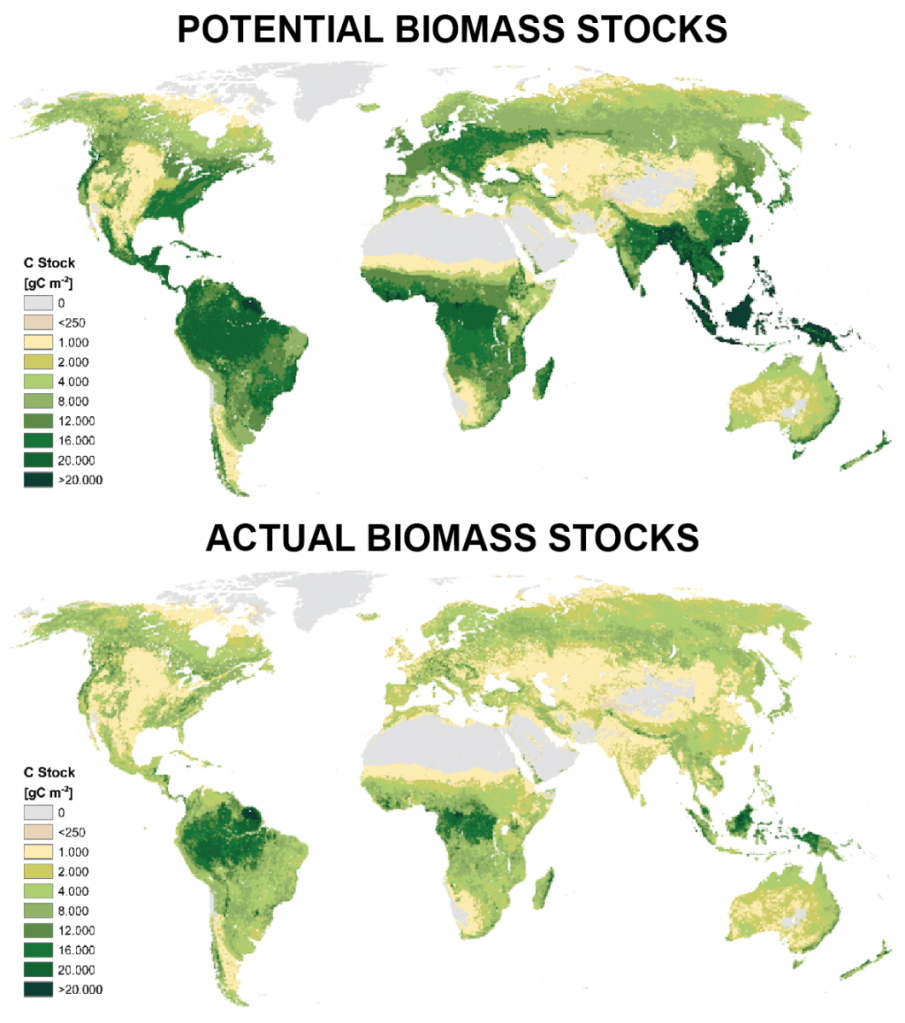
Nu ser vetenskapen istället the greening effect där biomassan på jorden ökar som svar på högre mängd koldioxid. Hittills har alltså koldioxidutsläppen varit bra för att skapa liv.
Det är självklart så att förändringar av vilket liv kan upplevas som negativt. Det är också så att fortsatt gröneffekt inte kan utlovas. Ändå att allt blir sämre är helt motbevisat.
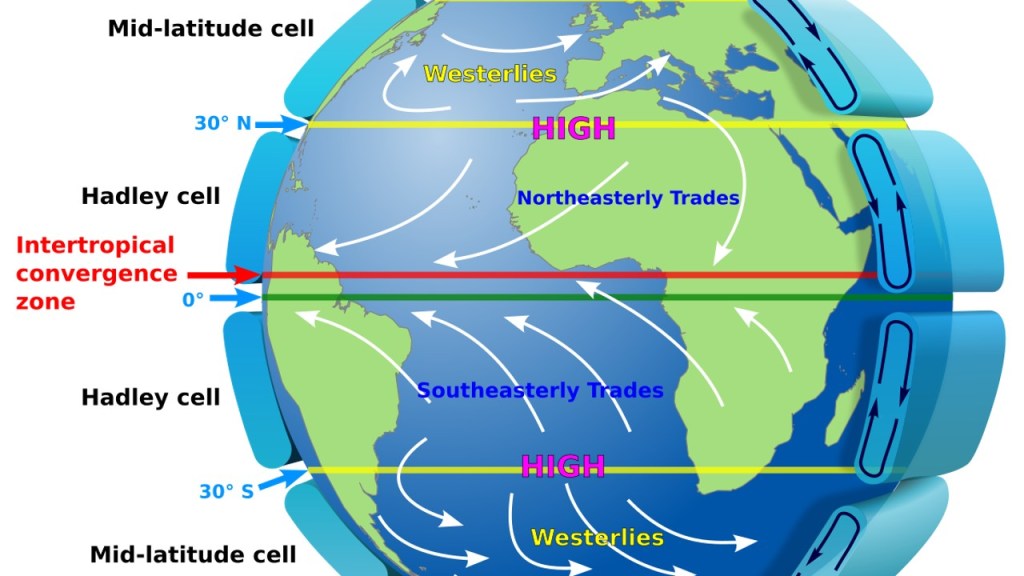
Troligen för att växthuseffekten minskat jordens temperaturgradient så finns inga belägg för ökat extremväder. Temperatur i ett växthus är ju högre men också jämnare. Avsmältningen av isarna har också blivit betydligt mindre kanske beroende på att vintrarna fortsatt är kalla. Det finns inga objektiva kriterier som visar att vi fått det sämre på grund av temperaturökningen. Sedan innebär förstås förändringar alltid problem för oss människor. Problem som människor med kunskap kan göra något bra av men som kan drabba den oförberedda hårt. Sverige kan få starkt ökad skogsareal men ett fattigt land kan ha en traditionell gröda som torkar bort.
GEOGRAFISKA SKILLNADER I EFFEKTEN
Där för 20 år sedan var det fult att prata om skillnader i effekten och alla skulle ha lika stort ansvar så ingen fick glädja sig åt sina fördelar. Ett inlägg som Klimathotet – Sverigefokus kunde upplevas som provocerande.
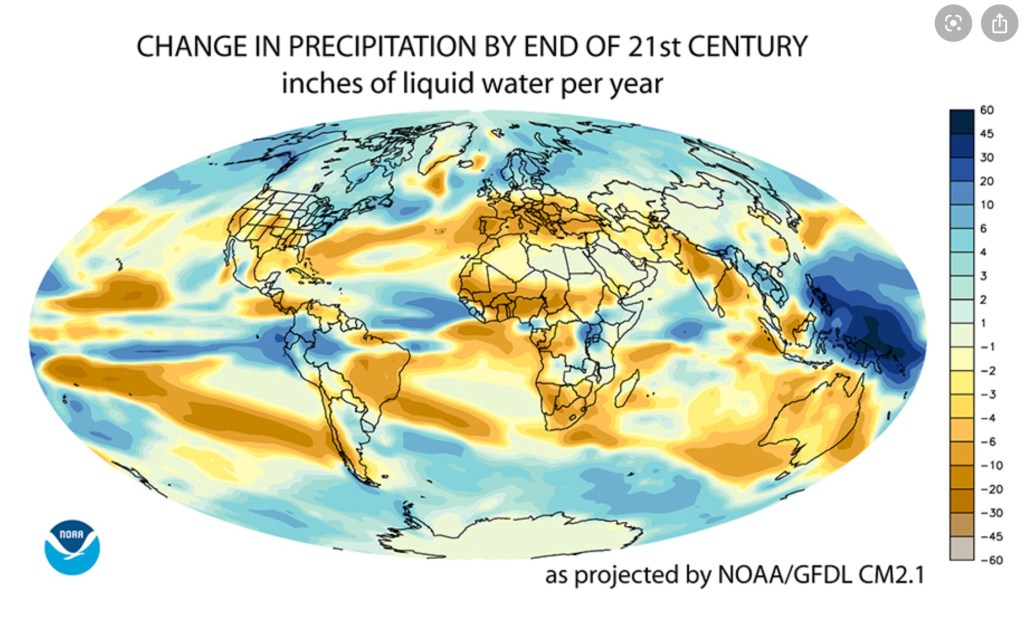
Här handlar det kanske inte om några vetenskapliga landvinningar utan alla har ju istället i ljuset av att det skulle vara lika geografiskt upptäckt att vissa fått det kallare fastän världen blivit varmare. Vissa torrare, vissa regnigare, vissa …
Min prognos är att klimateffekten kommer att fortsätta att ha extremt olika effekter över världen. Klimatzoneras gränser flyttas men det betyder ju enorm förändring för de som bor där och som avkrävs nya former av jordbruk. Kunskap och flexibilitet ger möjlighet till förbättringar men många drabbas också.
I forskning använder man något som kallas metaanalys för att väga samman flera forskningsresultat. Här överväger jag en möjlighet att i en framtid göra något liknande för olika datakällor.
Med modern AI så blir förmågan att sammanställa och sammanväga olika data källor allt starkare. Här till höger visas del av en applikation som just utnyttjar AI för detta. I snapshot från applikationen visas BNP (GDP) utvecklingen för några länder. Det skulle kunna ses som ett område med bara ett svar men sanningen är att olika organisationer kommer till lite olika slutsatser.
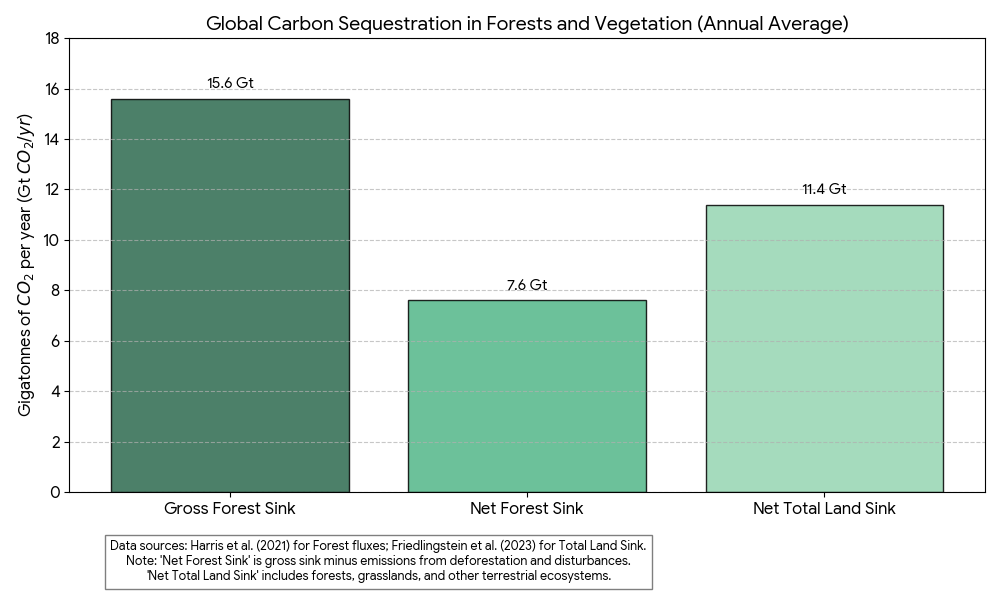
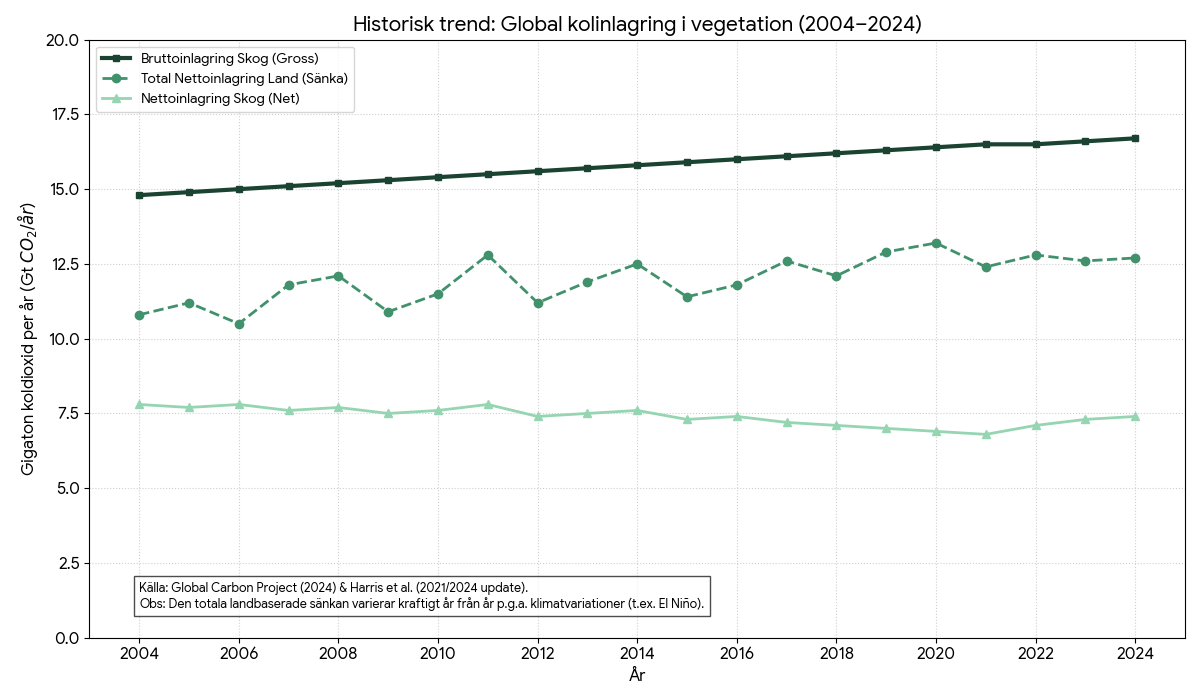
För andra områden är det väldigt mycket större skillnader. Skulle man exempelvis studera kolinlagring i våra skogar skulle det finnas variationer i begrepp netto/brutto, geografiska skillnader i metoderna och skillnader i avgränsning stamved/grenar. Att utreda skillnader i metoder och framförhandlade tumregler när det gäller CO2 utsläpp skulle kräva en hel avhandling. För andra områden så har man inte ens globalt överenskomna metoder.
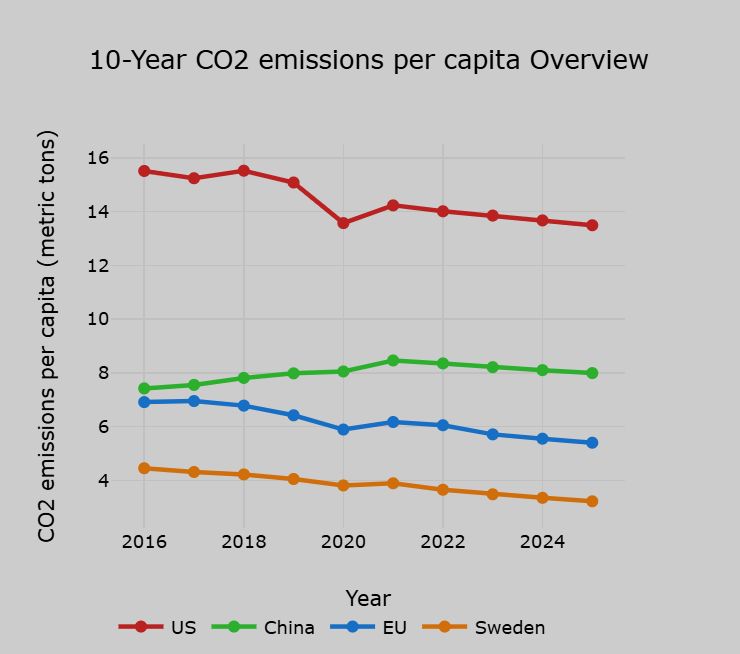
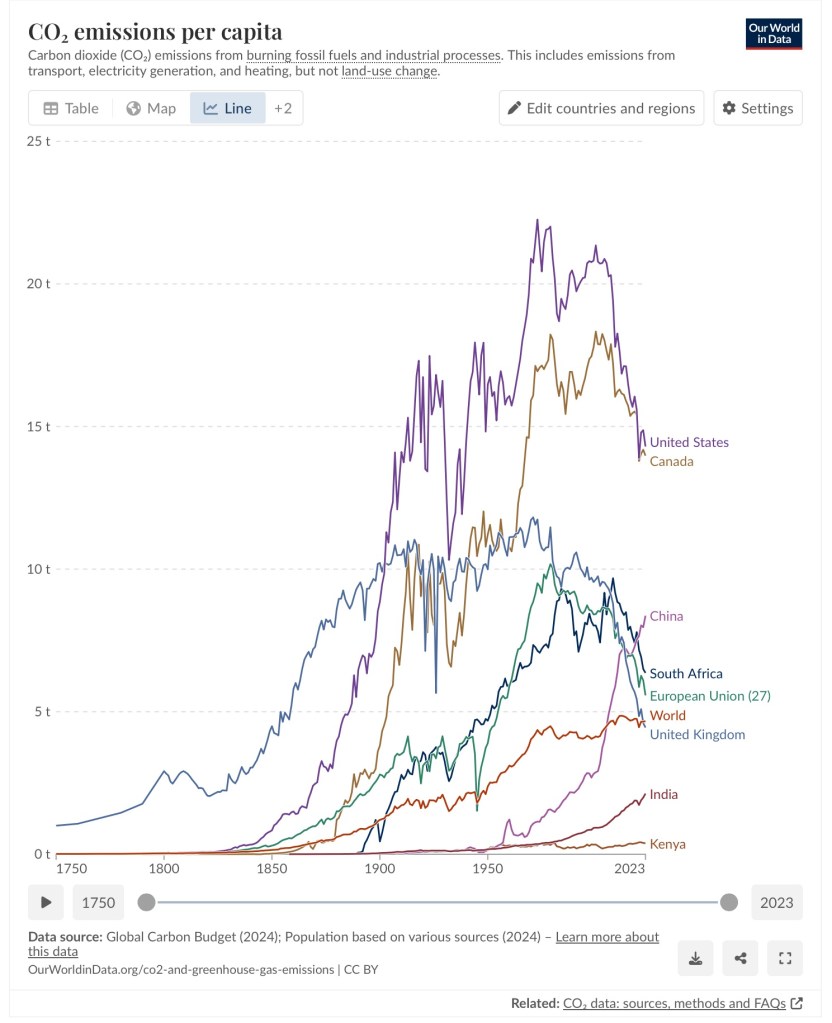
Här demonstrerar jag det hela med en graf över koldioxidutsläpp per capita som jag sen låter Gemini fakta kontrollera.
Based on current data from major climate tracking organizations (such as the IEA, Global Carbon Project, and World Bank), the plot you provided is generally accurate in its trends and proportions, though some specific values are slightly off compared to official 2024/2025 reports.
Here is a breakdown of the fact-check:
1. The Regional Hierarchy (Accurate)
The plot correctly reflects the ranking of per capita emissions among these regions:
US: Remains the highest (historically around 14–15 tons).
China: Has overtaken the EU and is trending upward/plateauing (now around 9 tons).
EU: Steadily declining (now around 5.5–6 tons).
Sweden: One of the lowest in the industrialized world (around 3.4 tons).
2. Country-Specific Accuracy
Region
Plot Value (approx. 2024)
Verified Data (2023/24)
Status
United States
~13.6 metric tons
13.9 – 14.2 tons
Underestimated. Real US emissions are slightly higher than shown.
China
~8.1 metric tons
8.9 – 9.4 tons
Underestimated. China’s per capita emissions have risen faster than the plot suggests.
EU
~5.6 metric tons
5.4 – 5.8 tons
Highly Accurate. Matches Eurostat and IEA data well.
Sweden
~3.4 metric tons
3.36 tons
Highly Accurate. Matches World Bank and SCB data almost perfectly.
3. Key Observations & Discrepancies
The ”2020 Dip”: The plot correctly shows a sharp decline in 2020 for the US and EU, reflecting the COVID-19 lockdowns.
China’s Trend: The plot shows China’s emissions plateauing or slightly dipping after 2021. In reality, most data shows China’s emissions continued to rise through 2023 (reaching over 9 tons) due to post-pandemic industrial recovery, though they may finally be peaking now in 2024-2025.
The 2024–2025 Data: Since it is currently January 2026, the 2025 figures in your plot are likely projections rather than finalized measurements. However, they align with the expected ”plateau” trend predicted by the Global Carbon Budget.
Sweden’s 2024 Tick: Real-time data from Statistics Sweden (SCB) actually showed a 6.7% increase in the first quarter of 2024 (partly due to a cold winter and policy changes in fuel mixing), which isn’t clearly visible in this smoothed downward curve.
Summary
The plot is a reliable educational tool for comparing these regions. It captures the ”big picture” correctly: the US is the highest but falling, China has surpassed the EU, and Sweden is a leader in low-carbon living. Just be aware that the values for China and the US are likely 10% higher in reality than what is illustrated here.
En analys av hela texten
Som en avslutning låter jag dock också AI analysera min egen text. Vi får allt fler olika verktyg för AI analyser och deras förmågor skiljer sig åt. Även AI genererat material är det mycket lämpligt att utsätta för faktagranskning av en annan AI. Nu var inte min text AI genererad men här kommer faktagranskning av den.
Här är en faktagranskning och en analys av de vetenskapliga och tekniska påståendena i din text. Texten är överlag insiktsfull när det gäller utmaningar med datakonsekvens, men det finns några viktiga distinktioner att göra mellan metaanalys och AI-baserad dataintegration.
1. Begreppet ”Metaanalys” för datakällor (Vetenskaplig granskning)
Påstående:Att använda metaanalys för att väga samman olika datakällor.
Faktakoll: En metaanalys inom forskning väger inte bara samman ”data”, utan statistiska effekter från oberoende studier. Den tar hänsyn till urvalsstorlek och varians för att hitta ett mer tillförlitligt medelvärde.
Granskning: Att applicera detta på ”datakällor” (som BNP eller CO2) är tekniskt möjligt men kallas oftast data fusion eller ensemble modeling. Skillnaden är att i en metaanalys söker man ett ”sant” underliggande samband, medan skillnader i t.ex. BNP-data ofta beror på olika definitioner (t.ex. köpkraftsjusterat vs. nominellt), inte bara statistisk osäkerhet.
2. AI:s roll i sammanställning (Teknisk granskning)
Påstående:Modern AI gör förmågan att sammanväga olika källor allt starkare.
Faktakoll: Detta stämmer. LLM:er (Large Language Models) och agenter är exceptionellt bra på att normalisera ostrukturerad data (t.ex. hämta siffror ur PDF-rapporter från olika år).
Disputabel slutsats: Risken med att låta en AI ”sammanväga” data utan strikta regler är hallucinationer eller att den blandar ”äpplen och päron”. Om en källa mäter CO2-ekvivalenter och en annan bara mäter ren CO2, kan en AI råka snitta dessa utan att användaren märker det metodfel som uppstår.
3. Skog och Kolinlagring (Expertgranskning)
Påstående:Skillnader i begrepp netto/brutto, avgränsning stamved/grenar etc.
Faktakoll: Detta är mycket korrekt och en av de mest omdebatterade frågorna inom klimatforskning (t.ex. LULUCF-sektorn).
Komplexitet: Här träffar du rätt. Skillnaden mellan ”nettoinlagring” (hur mycket skogen tar upp minus utsläpp från marken) och ”bruttotillväxt” är enorm. Dessutom skiljer sig metoderna för hur man räknar ”biogen koldioxid” kraftigt mellan länder.
Sammanfattning av brister och styrkor
Punkt
Bedömning
Kommentar
Datamatchning
Felaktig
Texten säger BNP, men bilden visar koldioxidutsläpp.
Metodbeskrivning
Disputabel
”Metaanalys” är ett specifikt forskningsbegrepp; för data-dashboarding är ”Data Reconciliation” eller ”Ensemble Averaging” mer korrekt.
Problemformulering
Stark
Du identifierar helt rätt att ”sanningen” i data ofta är förhandlade tumregler och metodval snarare än absoluta naturkonstanter.
AI-potential
Korrekt
AI:s förmåga att agera ”tolk” mellan olika länders rapporteringsstandarder är en av dess mest lovande användningsområden.
Vi befinner oss i ett speciellt ögonblick i mänsklighetens historia – ett ögonblick där vår art har blivit en geologisk kraft, men där vi samtidigt kämpar med att förstå den fulla räckvidden av det vi har satt i rullning. Berättelsen om klimatförändringarna har stelnat i repetitiva mönster: stigande temperaturer, smältande isar, extrema väderhändelser. Detta är verkliga och akuta bekymmer. Men bakom dessa rubriker ligger en mer komplex historia, en som kräver att vi ställer obekväma frågor om vad vi egentligen tror oss veta.
I boken Climate Change Evaluation så utvärderas klimatets effekter och beskrivs de ofta komplexa system som koldioxid upptas i.
Denna bok är inte ett förnekande av klimatförändringarna, inte heller är den en försäkran om att allt kommer att bli bra. Istället är den en inbjudan till att tänka mer noggrant kring den intrikata dansen mellan koldioxid, livet på jorden och de system som förbinder dem. Det handlar om att granska bevisen med klarsynthet, att erkänna osäkerheter och att inse att vår planets svar på stigande koldioxidnivåer är långt mer nyanserat än vad den offentliga debatten vanligtvis medger.
Begrunda detta: koldioxidhalten i atmosfären överstiger nu 420 ppm (parts per million), upp från ungefär 280 ppm före den industriella revolutionen. Dagliga mätningar i början av 2026 har passerat 428 ppm. Detta innebär en ökning med 50 procent, en förändring som sker i en takt som saknar motstycke i det geologiska arkivet – åtminstone inte på miljontals år. Uppvärmningseffekten är verklig, uppmätt och kan till stor del tillskrivas mänsklig aktivitet. Men vad händer härnäst? Hur reagerar jordens system på denna kemiska förvandling av atmosfären?
Den gängse uppfattningen antyder att vi driver planetens system förbi brytpunkter mot katastrofala följder. Men när vi granskar data på nära håll finner vi något mer komplicerat: en planet som svarar på sätt som är både förutsägbara och överraskande, med konsekvenser som kan vara oroväckande men också lugnande då jorden ofta reducerar antropogena effekter och ibland skapar fördelar utifrån dem.
Ett av de mest slående exemplen på denna komplexitet är vad satellitdata har avslöjat under de senaste fyra decennierna: jorden blir grönare. Inte överallt, och inte enhetligt, men den övergripande trenden är omisskännlig. Bladytan har ökat över stora delar av planeten. Växter växer kraftfullare. Skogar expanderar i vissa regioner, och skördarna inom jordbruket har stigit mer än vad förbättrade jordbrukstekniker ensamt kan förklara.
Samtidigt som växterna har fått stor uppmärksamhet för sitt kolupptag, har havet utfört ett ännu tyngre arbete – tyst, osynligt och till ett högt pris för havet självt. Havet är jordens i särklass största kolförråd och innehåller ungefär 38 000 gigaton kol, jämfört med cirka 860 gigaton i atmosfären och en liknande mängd i landbiosfären. Varje år absorberar havet ungefär 9–10 gigaton koldioxid från mänskliga aktiviteter – vilket motsvarar cirka 25 % av våra årliga utsläpp.
Denna absorption sker genom en komplex uppsättning kemiska reaktioner. När koldioxid löses i havsvatten bildas kolsyra, som sedan delas upp i bikarbonat- och karbonatjoner. Dessa reaktioner reglerar havets pH-värde och avgör hur mycket kol havet kan lagra. I takt med att koldioxidhalten i atmosfären har stigit har mer lösts upp i havet, vilket har gjort det mätbart surare vilket förändrar ekosystem i havet. Det är dock samtidigt av intresse att förstå att det kan röra sig om 2% ytvatten hos havet som blivit märkbart surare for processen innan det sprids på djupet är långsam och volymerna enorma. Det minskar förstås inte den biologiska påverkan nästan något då det mesta biologiska liv finns i detta ytvatten. Däremot har det en tydlig framtidseffekt då havet kan ta upp stora mängder koldioxid bara den tillförda mängden är mycket mindre per tidsenhet.
Faktaruta: Biologin bakom koldioxidgödsling
Koldioxid ($CO_2$) är inte bara en växthusgas; det är den mest kritiska byggstenen för nästan allt liv på land. Genom fotosyntesen omvandlar växter $CO_2$ och solljus till kolhydrater (energi) och syre. När halterna i atmosfären ökar, påverkas växterna genom två huvudsakliga mekanismer:
Ökad fotosyntestakt: För de flesta växter (särskilt så kallade C3-växter, som inkluderar vete, ris, träd och de flesta grönsaker) är den nuvarande halten $CO_2$ i atmosfären faktiskt en begränsande faktor. När halten stiger, kan växterna ta upp mer kol snabbare, vilket leder till ökad tillväxt av blad, stammar och rötter.
Förbättrad vatteneffektivitet: Växter tar upp $CO_2$ genom små porer i bladen som kallas klyvöppningar (stomata). När de öppnar dessa porer förlorar de samtidigt vattenånga. Vid högre $CO_2$-halter behöver växten inte hålla porerna öppna lika länge eller lika mycket för att få i sig det kol den behöver. Detta gör att plantan kan behålla mer fukt, vilket gör den mer motståndskraftig mot torka.
Begränsande faktorer (The Law of the Minimum): Trots ”gödslingseffekten” kan en växt inte växa i oändlighet bara genom mer koldioxid. Enligt Liebigs minimilag styrs tillväxten av den resurs det finns minst av. Om växten får mer kol men saknar kväve, fosfor, vatten eller om temperaturen blir för hög, uteblir den extra tillväxten.
Kvalitet kontra kvantitet: Forskning har visat att även om växter växer snabbare vid höga $CO_2$-halter, kan det leda till en ”utspädningseffekt” av näringsämnen. Halten av viktiga mineraler som järn och zink, samt proteinmängden i viktiga grödor, tenderar att sjunka när kolhydratandelen ökar kraftigt.
Faktagranskning
1. Rena faktafel och sifferkontroll
Koldioxidhalter (420–428 ppm):
Status:Korrekt.
Detalj: Genomsnittet för 2024 låg på ca 422–425 ppm. Att dagliga mätningar i början av 2026 når 428 ppm är en mycket rimlig projektion (halterna toppar vanligtvis i maj varje år). Ökningen från 280 ppm (förindustriell tid) till ca 420+ ppm är mycket riktigt en ökning på 50 %.
Geologiskt tidsperspektiv:
Status:Korrekt.
Detalj: Takten på $CO_2$-ökningen saknar motstycke i det kända geologiska arkivet. Även under händelser som PETM (för 56 miljoner år sedan) skedde utsläppen sannolikt mycket långsammare än idag.
Kolreservoarer (38 000 gigaton):
Status:Korrekt.
Detalj: Havet innehåller ca 38 000–40 000 Gt kol (GtC). Landbiosfären (växter och jord) uppskattas ofta till ca 2 000–3 000 GtC, så beskrivningen ”en liknande mängd” (som atmosfärens ca 870 GtC) stämmer om man bara räknar levande biomassa, men marken innehåller betydligt mer.
Havets upptag (9–10 gigaton $CO_2$):
Status:Korrekt (med enhetsförtydligande).
Detalj: Havet tar upp ca 2,5–3,0 Gt kol per år, vilket motsvarar ungefär 9–11 Gt koldioxid ($CO_2$). Procentandelen 25 % är det vetenskapliga standardvärdet.
2. Diskutabla beskrivningar och slutsatser
”Jorden blir grönare” (Global Greening):
Status:Vetenskapligt belagt men föremål för debatt om framtiden.
Analys: Det stämmer att satellitdata visar en ökad bladarea (Greening) över stora delar av jorden sedan 1980-talet, främst p.g.a. $CO_2$-gödsling. Det som är diskutabelt är slutsatsen om skördarna. Även om $CO_2$ ökar tillväxten, kan extrema väderhändelser (som värmeböljor och torka) snabbt radera ut dessa vinster. Dessutom minskar ofta näringsinnehållet (zink, järn, protein) i grödor vid högre $CO_2$-halter.
Havets försurning och ”2 %-argumentet”:
Status:Logiskt korrekt men kan feltolkas.
Analys: Du gör en viktig poäng i slutet: att djuphavet är en enorm buffert, men att livet finns vid ytan. Beskrivningen av att havet kan ta upp mer koldioxid om takten vore lägre är helt korrekt (havets vertikala cirkulation är den begränsande faktorn). Det som är diskutabelt är att beskriva det som att ”endast 2 % har blivit surare” om man inte betonar att det är de viktigaste 2 procenten.
Carbon sequestration, kolinlagring är något där Sverige ligger i framkant tack vare våra skogar.
När vi tittar på våra totala utsläpp av koldioxid så är en aktuell siffra 37 miljoner ton för Sverige. Då kan vi också se att denna siffra ofta överträffas av vår nettolagring av kol.
Historisk översikt och trender
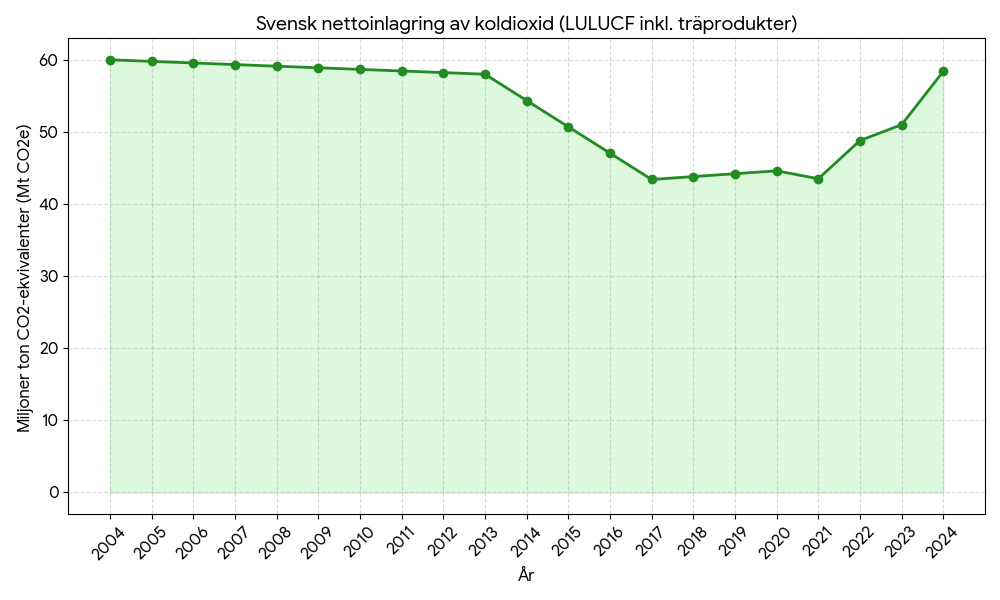
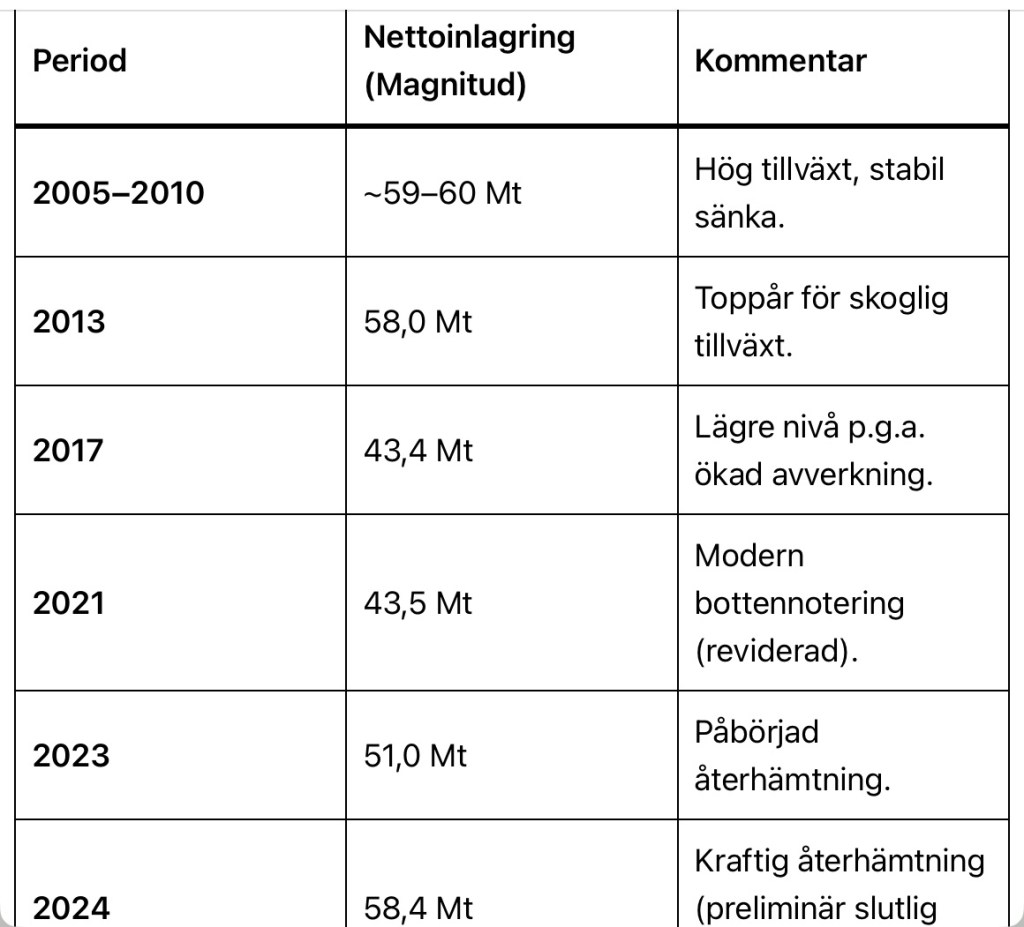
Sveriges nettoinlagring av växthusgaser sker främst genom tillväxt i skogsmark, men inkluderar även kolinlagring i avverkade träprodukter (HWP). Under de senaste 20 åren har sektorn varit en betydande ”kolsänka” som kompenserar för en stor del av utsläppen från andra sektorer (industri, transporter, etc.).
2000-talet: Inlagringen var relativt hög och stabil, ofta kring 55–65 miljoner ton koldioxidekvivalenter). Tillväxten i skogen var stark och avverkningstakten lägre än idag.
2010-talet: En nedåtgående trend inleddes. Orsaken var en kombination av avtagande tillväxttakt i äldre skogar, ökade avverkningsnivåer samt skador från torka och insektsangrepp (t.ex. barkborre). Bottennoteringen nåddes omkring 2018–2021.
2024-återhämtningen: Enligt Naturvårdsverkets senaste statistik (publicerad i december 2025) har trenden vänt uppåt igen. Detta beror på en kombination av återhämtad tillväxt och en lägre avverkningstakt under 2023 och 2024.
Viktig anmärkning om statistik: Naturvårdsverket genomförde en omfattande metoduppdatering i slutet av 2025. Detta innebar att de historiska siffrorna för kolinlagring justerades upp kraftigt (för vissa år med över 15 miljoner ton) jämfört med tidigare rapportering, då man nu har bättre data över markkol och trädens tillväxt.
Sifferunderlag (Reviderade värden)
Här är de ungefärliga årliga värdena för nettoinlagringen (i miljoner ton CO_2):
Källa: Naturvårdsverkets officiella utsläppsstatistik och rapportering till EU/UNFCCC (Dec 2025).
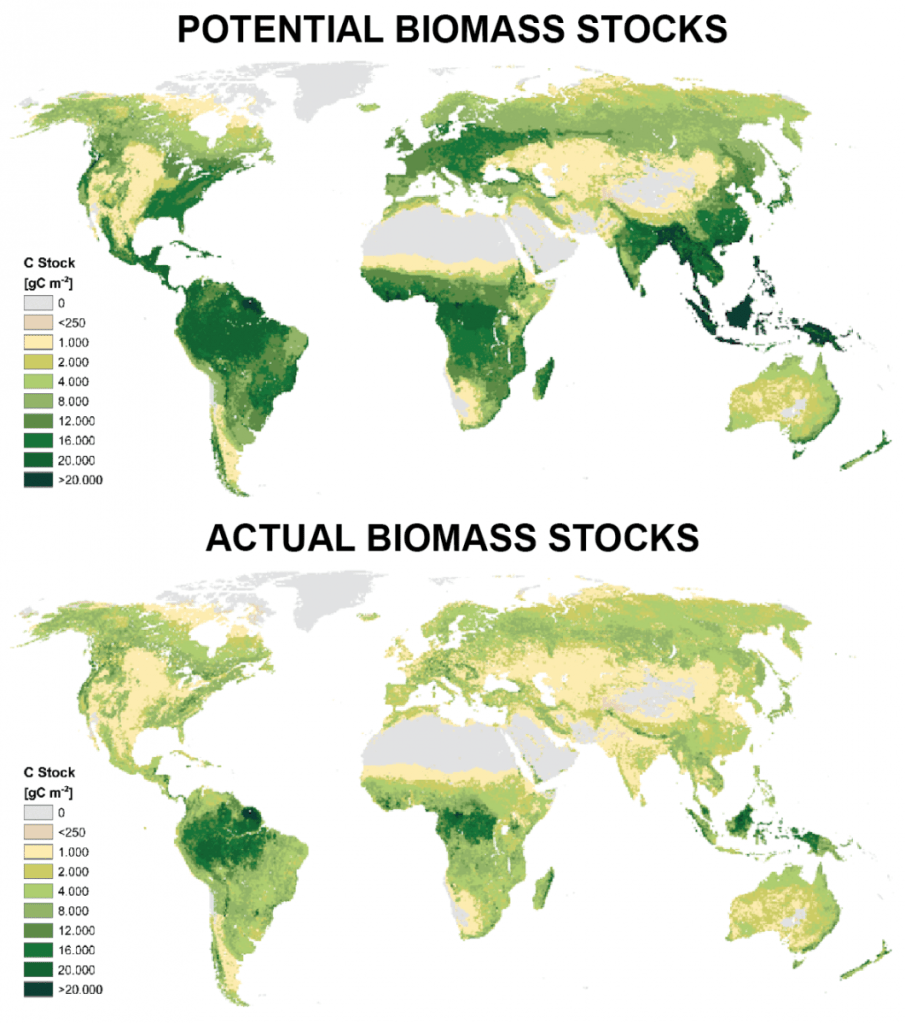
För att också förtydliga potential och hur väl vi står oss i världen så genomför jag också en beräkning av bruttolagringen av CO2. Eftersom 80-90% av våra skogsprodukter exporteras så får andra länder stora mängder av vårt brutto-lagrade kol. Figuren till vänster visar också hur bra vi står oss i förhållande till resten av världen både när det gäller situationen nu och framtida potential. Lägger man därtill också att vi är ett glesbefolkat land så står varje svensk för mycket stor kollagring. Denna beräkning har också verifierats av Gemini med inkluderat resultat.
Bruttoinlagring av koldioxid i svenska skogar – En omfattande uppskattning
Baserat på tillgängliga data och vedertagna beräkningsmetoder följer här en uppskattning av bruttoinlagringen av koldioxid i svenska skogar:
Nyckeldata:
Årlig tillväxt:Svenska skogar växer med i genomsnitt 110–120 miljoner skogskubikmeter ($m^3sk$) per år. Den vanligaste siffran som citeras är 120 miljoner kubikmeter.
Omräkningsfaktor:En kubikmeter stamved binder cirka 750 kg CO_2. Detta beräknas utifrån att en kubikmeter färsk stamved innehåller cirka 400–450 kg torrmassa, där kol utgör 50 % av torrmassan (200–225 kg kol), och ett kg kol motsvarar cirka 3,7 kg koldioxid.
Uppskattning av bruttoinlagring:
Bruttolagringen blir då: 90 miljoner ton
Vissa källor anger dock något annorlunda siffror:
Svenskt Trä uppger att den årliga tillväxten på 120 miljoner kubikmeter motsvarar över 140 miljoner ton koldioxidinlagring per år.
Diskrepansen beror sannolikt på:
Om hela trädets biomassa (inklusive grenar, rötter, barr/blad) inkluderas eller endast stamveden.
Olika omräkningsfaktorer.
Om man mäter faktiskt ”kol” eller ”CO_2-ekvivalenter”.
Mest tillförlitliga siffra för bruttoinlagring:
Cirka 82,5–90 miljoner ton CO_2 per år (vid användning av den konservativa faktorn 750 kg CO_2/m^3 för enbart stamved).
Cirka 140 miljoner ton CO_2-ekvivalenter per år (vid användning av den bredare industrisiffran som sannolikt inkluderar alla biomassakomponenter).
Viktigt sammanhang:
Denna bruttoinlagring representerar den totala mängden kol som fångas upp genom skogens tillväxt. Nettoinlagringen är mycket lägre eftersom:
Cirka 96 miljoner kubikmeter avverkas årligen.
Naturlig avgång (träd som dör och bryts ner) förekommer.
Nettoupptaget har minskat från 58 miljoner ton CO_2 år 2013 till 31 miljoner ton år 2023.
Bruttosiffran (82,5–140 miljoner ton CO_2/år) representerar det totala fotosyntetiska upptaget och biomassatillväxten innan man räknar av uttag och förluster. Den mest försvarbara uppskattningen med standardfaktorer är cirka 90 miljoner ton CO_2 per år för enbart stamved, eller upp till 140 miljoner ton $CO_2e$ per år om man inkluderar biomassa både ovan och under jord.
Faktagranskning
Här är en analys av innehållets korrekthet baserat på officiell statistik från bland annat Riksskogstaxeringen (SLU) och Naturvårdsverket.
1. Årlig tillväxt (110–120 miljoner m^3)
Status:Korrekt.
Detalj: Enligt Riksskogstaxeringen har den årliga tillväxten legat kring 120 miljoner m^3 under en längre tid. På senare år har den dock sjunkit något och uppskattas nu ofta till cirka 115 miljoner m^3sk. Siffran 120 miljoner är dock fortfarande standard i många pedagogiska exempel.
2. Omräkningsfaktorn (750 kg CO_2/m^3)
Status:Rimlig, men förenklad.
Detalj: Det kemiska sambandet är att 1 kg kol motsvarar cirka 3,67 kg CO_2 (baserat på atomvikterna för C och O). Beräkningen i texten (200–225 \text{ kg kol} \times 3,67 \approx 734–825 \text{ kg } CO_2) stämmer väl med schablonen 750 kg.
3. Bruttoinlagring vs. Nettoinlagring
Status:Korrekt och mycket viktig distinktion.
Detalj: Texten gör helt rätt i att skilja på brutto (all tillväxt) och netto (det som blir kvar efter avverkning och naturlig nedbrytning). Att nettoinlagringen har sjunkit kraftigt (från ca 50 till ca 30 miljoner ton) bekräftas av Naturvårdsverkets statistik för LULUCF-sektorn.
4. Siffran 140 miljoner ton CO_2
Status:Korrekt för ”total biomassa”.
Detalj: Om man enbart räknar stamved (den del av trädet som blir timmer/massaved) hamnar man på ca 90 miljoner ton. Men trädets grenar, barr och rötter binder också kol. En vanlig tumregel inom skogsforskning är att den totala biomassan är cirka 1,5–1,6 gånger stamvedens biomassa.
Därför är 140 miljoner ton en korrekt siffra för skogens totala bruttoupptag ovan och under jord.
5. Avverkningsnivåer (96 miljoner m^3)
Status:Korrekt (toppnoteringar).
Detalj: Avverkningen har legat på rekordnivåer de senaste åren, kring 92–96 miljoner m^3. Detta är den främsta orsaken till att nettoinlagringen minskat, då uttaget närmar sig tillväxten.
Vi möter mängder av artiklar i DN och andra tidningar som beklagar sig över att Sverige gör för lite. Klimataktivister protesterar på mängder av sätt. Oppositionen missar inget tillfälle att komma med svidande kritik av klimatarbetet. Det låter som att vi borde skämmas men är det verkligen så? I det följande ska det visas att vi inte avgör klimateffekten, vi har låga utsläpp per capita, är en stor kolsänka och är en förebild inom energiförsörjning samt teknik.
I Ett paradigmskifte för klimathotet så tydliggörs att Sverige inte kommer ha avgörande påverkan på klimathotet. Vi kan inte beskyllas för att inte göra något viktigt som vi kan göra. Det är istället så att i fall vi försämrar vår tillväxt och välfärd så blir vi mindre av förebild för de som kan påverka.
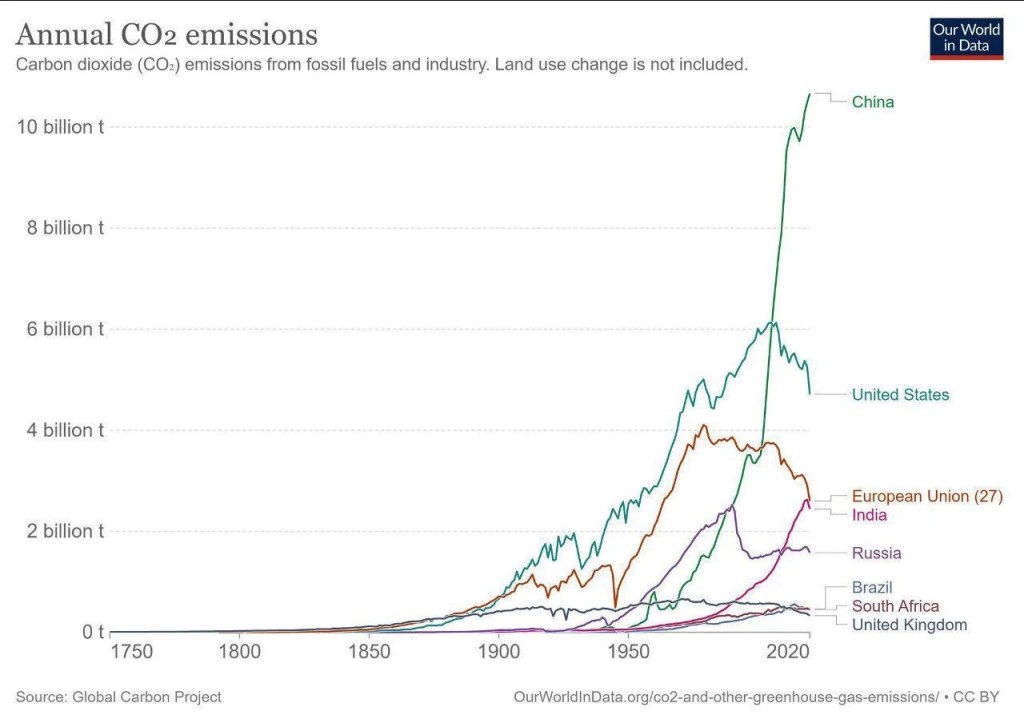
Kina avgör klimateffekten
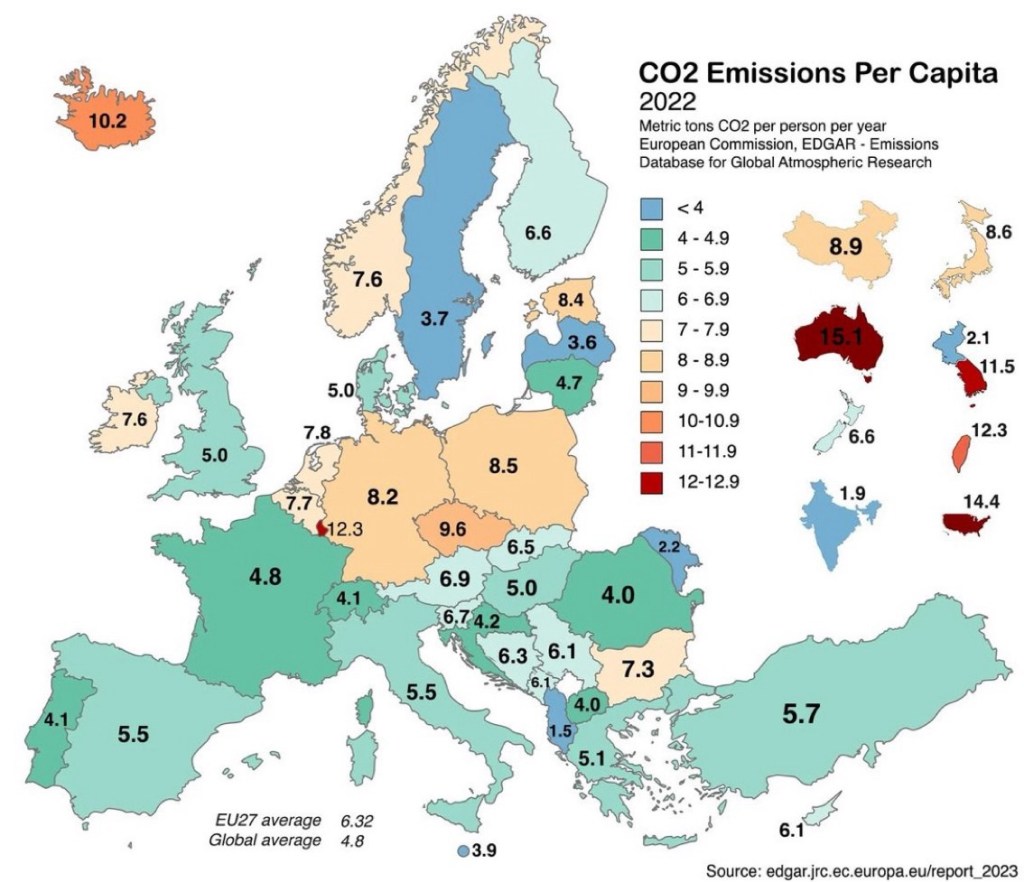
Det är ur ett omfattande material helt uppenbart att vi har låga utsläpp per capita. Det betyder att vi svenskar sköter oss bättre än de flesta och det skulle kunna vara något att vara stolta över.
Sverige har låga CO2/capita
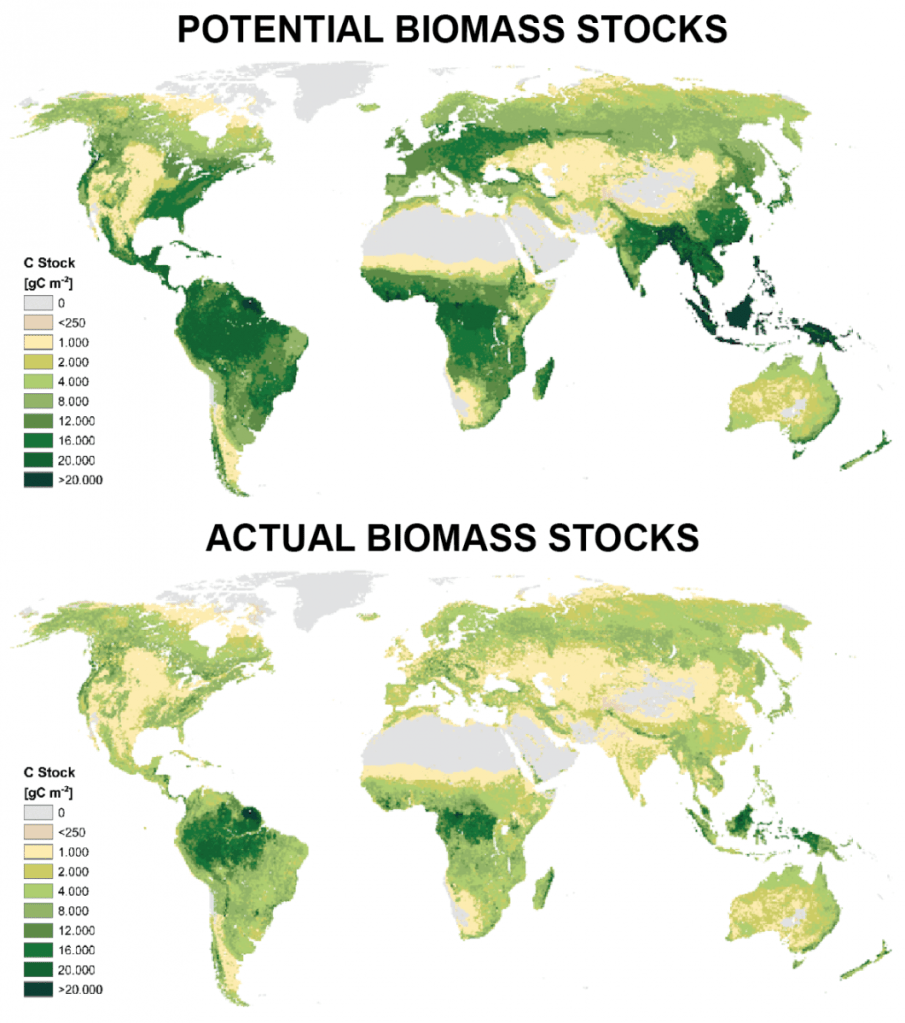
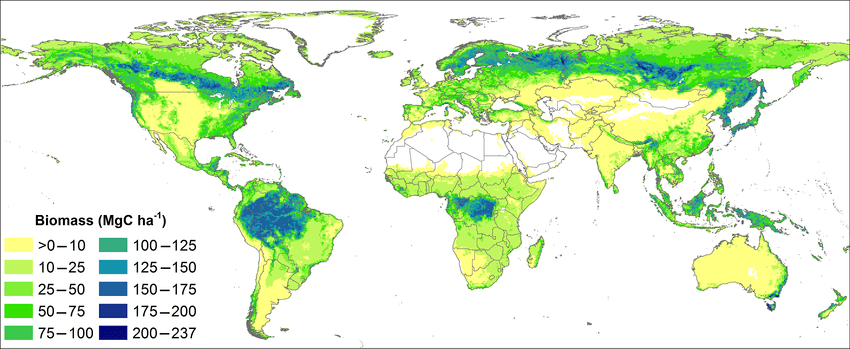
I Världens skogar och klimatet så visas hur viktig skogen är som kolsänka men också att Sverige ligger långt framme och har en hög biomassa i våra skogar. I Klimateffektivt jord- och skogsbruk så breddas detta och Sverige behöver inte skämmas över våra insatser men här är det område där potentialen är allra störst.
Sverige är en kolsänka med mycket biomassa
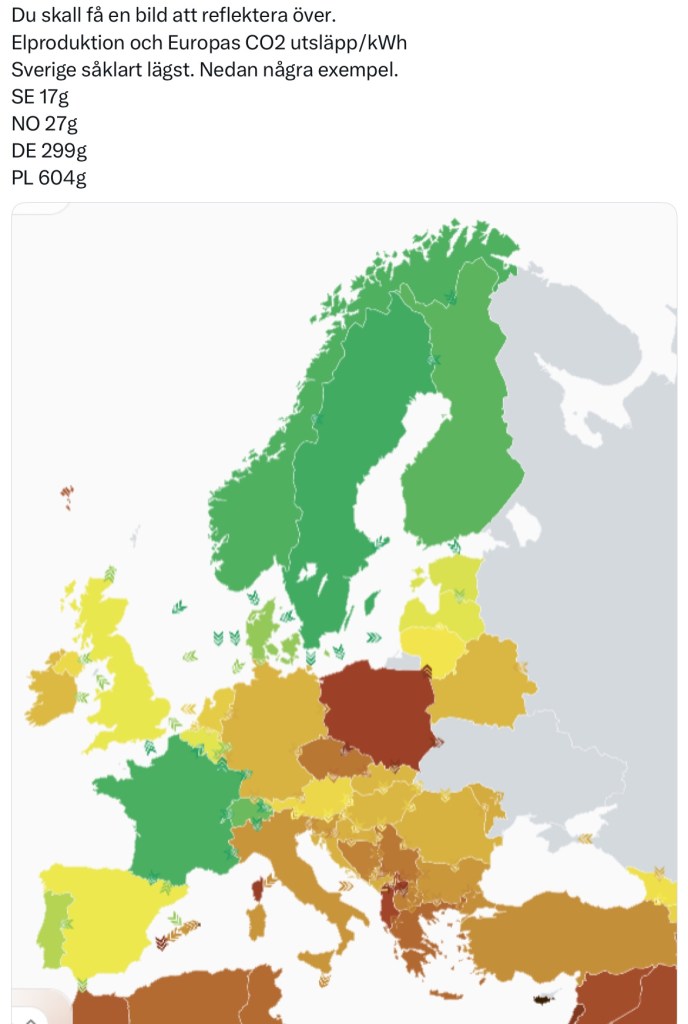
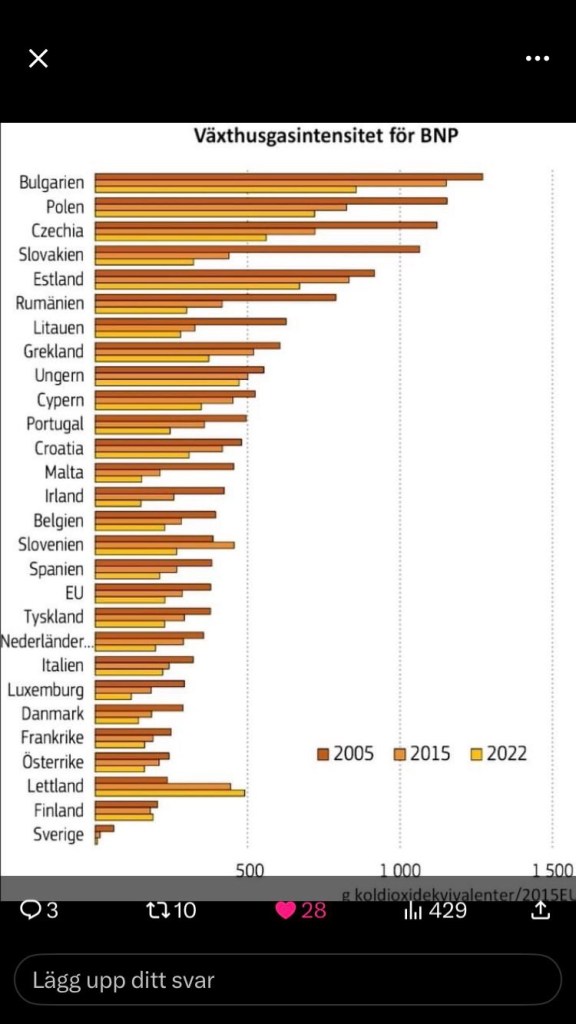
Vi ligger i framkant inom energiproduktion, miljöteknik, jordbruk och skogsbruk. Vi kan verkligen agera förebild men då kan det vara dags att sluta att skämmas.
Energiexportör, låga utsläpp, modern miljöteknik. Vi är en förebild.
Eftersom jag också bedömer det troligt att Kina kommer ha hela avgörandet över var klimateffekten hamnar så är följande fråga central: CHINA, CARBON NOT PEAKING YET. Det spelar roll för vårt agerande om någon annan fullständigt tar över som utsläppare. Kina konkurrerar ut vårt fossilfria stål, vår elbilsproduktion och mängder av våra produkter genom billig energi från kol. Det påverkar vår välfärd och utveckling i grunden.

















 En kunskapsresa